
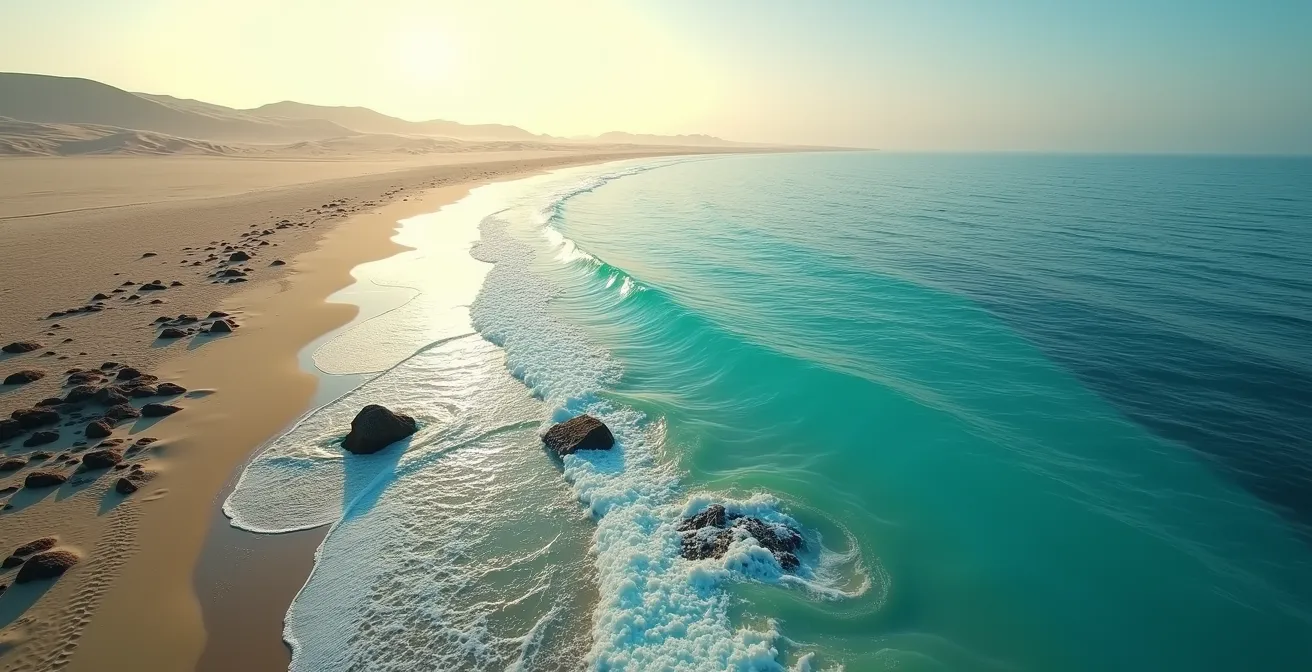
True relief from arthritis isn’t just about soaking in salt water; it’s about harnessing the specific, high-potency mineral profile unique to the Arabian Gulf.
- The Gulf’s high magnesium concentration creates a powerful osmotic gradient, delivering anti-inflammatory benefits directly to tissues at a cellular level.
- Effective therapy requires a strategic approach, combining warm sea soaks with cold plunge therapy and precise hydration to counter the mineral-poor nature of local desalinated water.
Recommendation: Prioritize certified thalassotherapy centers over standard hotel spas to ensure treatments meet the therapeutic mineral and temperature thresholds for genuine, measurable results.
For patients navigating the chronic discomfort of joint pain, the search for effective, natural relief is a constant journey. In the United Arab Emirates, a region synonymous with cutting-edge wellness, the warm, saline embrace of the Arabian Gulf has long been touted as a therapeutic balm. The prevailing wisdom suggests that a simple dip in the sea can soothe aching joints, a platitude enjoyed by residents and tourists alike. This belief places seawater therapy alongside a host of other regional wellness practices, from traditional hammams to emerging trends like camel milk treatments.
However, this general understanding barely scratches the surface of a profound scientific reality. The effectiveness of seawater for conditions like arthritis is not a uniform phenomenon. But what if the true key to unlocking this healing power lies not just in the salt, but in the specific, measurable concentration of minerals unique to this geographic location? The question transitions from *if* seawater helps, to *why* the Arabian Gulf’s composition is particularly potent. This perspective shifts the conversation from a simple recreational activity to a targeted therapeutic intervention known as thalassotherapy.
The answer involves a deep dive into marine biology, chemistry, and human physiology. It’s a story of osmotic gradients, mineral bioavailability, and the critical interplay between the mineral-rich sea and the region’s mineral-poor desalinated drinking water. This article will dissect the science behind the UAE’s thalassotherapy advantage. We will explore the precise mineral concentrations that trigger healing, compare different hydrotherapy methods, and reveal the essential strategies required to maximize benefits and avoid common pitfalls, providing a clear roadmap for anyone seeking genuine, science-backed relief from joint pain.
To guide you through this scientific exploration, this article is structured to answer your most pressing questions. Below is a summary of the topics we will cover, from the optimal duration for skin treatments to the critical differences between a spa visit and a true medical therapy.
Summary: Why Is Seawater Concentration More Effective for Arthritis in the UAE?
- Psoriasis and Salt Water: How Long Should You Soak for Results?
- Cold Seawater Plunge vs Heated Pool: Which Speeds Muscle Repair?
- Medical Center vs Hotel Spa: Which Thalasso Treatment is Genuine?
- The Hydration Mistake That Makes You Dizzy After Salt Treatments
- How Many Sessions Per Week are Needed to See measurable Detox Results?
- Why Camel Milk Treatments Are Becoming the New Anti-Aging Trend?
- Laser vs Chemical Peel: Which Gets You Back to Work the Next Day?
- What Is the Difference Between a Traditional Hammam and a Modern Steam Room?
Psoriasis and Salt Water: How Long Should You Soak for Results?
The efficacy of seawater therapy, particularly for inflammatory conditions like psoriasis and psoriatic arthritis, is directly linked to two factors: mineral concentration and exposure time. It’s not enough to simply be in salt water; the water must possess a therapeutic threshold of specific minerals, and the body needs sufficient time to absorb them. The Arabian Gulf is a prime example of a body of water that meets this criterion. Its unique geological basin contributes to a higher-than-average mineral density, particularly magnesium, a crucial anti-inflammatory agent. Studies show that seawater contains a significant concentration of magnesium at 1290 ppm, a level at which transdermal (through the skin) absorption becomes highly efficient.
This process of mineral absorption is known as bioavailability. When you soak in mineral-rich seawater, an osmotic pressure difference encourages minerals like magnesium, potassium, and bromide to migrate into the epidermis. For a condition like psoriasis, where skin cell turnover is rapid and inflammation is high, these minerals help to normalize skin function and reduce the inflammatory response. The famous effects of Dead Sea climatotherapy, which has been shown to significantly improve the quality of life for individuals with psoriasis, operate on this same principle, albeit with a different and even more extreme mineral profile.
So, how long should you soak? While a quick dip is refreshing, for therapeutic results, a longer duration is necessary. Most thalassotherapy protocols recommend sessions of at least 20 to 30 minutes in heated seawater (around 34-37°C) to facilitate optimal mineral absorption and muscle relaxation. This duration allows the skin to become saturated and the osmotic exchange to take full effect. Shorter durations may not provide enough time for a meaningful transfer of minerals to occur, limiting the anti-inflammatory and skin-soothing benefits.
Cold Seawater Plunge vs Heated Pool: Which Speeds Muscle Repair?
While warm seawater is excellent for chronic pain and mineral absorption, the strategic use of temperature variation—specifically cold water immersion—offers a powerful, complementary benefit for muscle repair and acute inflammation. This practice, known as thermo-contrast therapy, involves alternating between hot and cold water treatments to stimulate circulation and accelerate recovery. An athlete with muscle strain or an individual with acute joint inflammation might find this approach far more effective than heat alone. The warm water of a heated thalassotherapy pool (or the Arabian Gulf itself) relaxes muscles and increases blood flow, preparing the body for the next stage.
The subsequent plunge into cold water triggers a rapid constriction of blood vessels (vasoconstriction). This process helps to flush out metabolic waste products, such as lactic acid, from the muscle tissues and significantly reduces inflammation and swelling. According to research, the most effective temperature for this is not freezing, but controlled. In fact, research indicates that medium-temperature cold water immersion at 11°C–15°C provides optimal benefits for muscle recovery without causing excessive stress to the body. This is a key differentiator in a professional setting; a controlled cold plunge pool offers a precision that a simple cold shower cannot match.
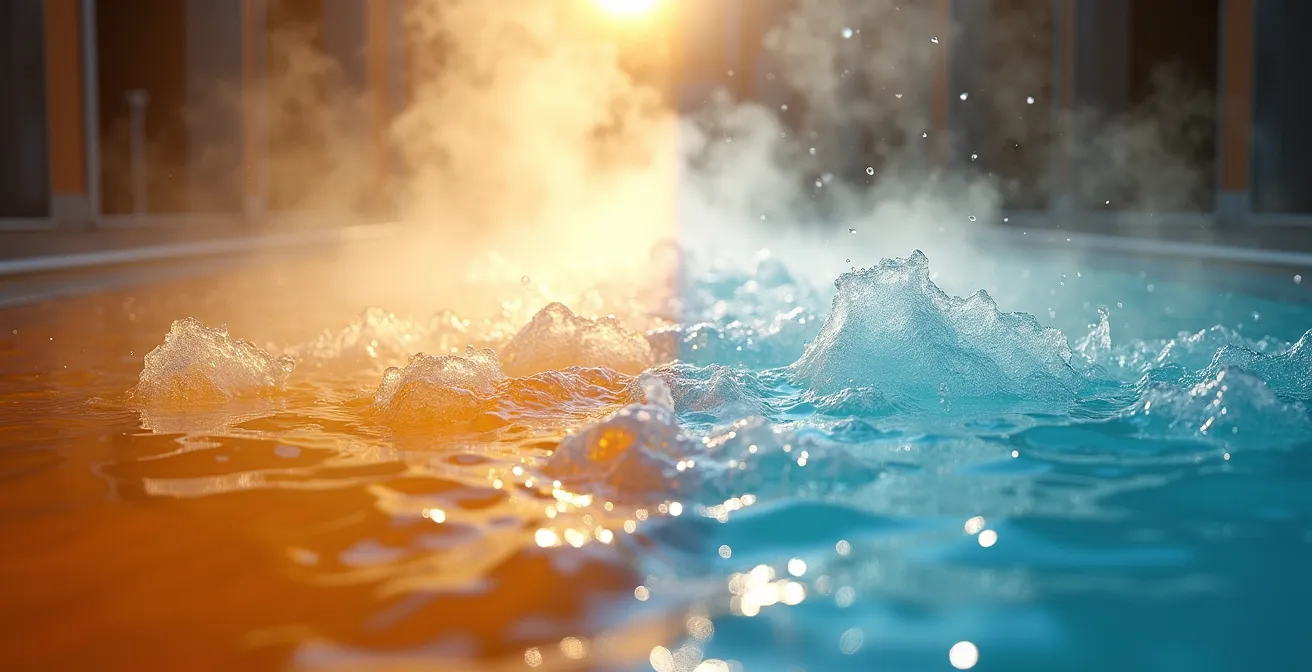
Comparing this to a standard heated swimming pool reveals the limitations of heat-only therapy. A heated freshwater pool provides warmth and relaxation but lacks both the mineral content of seawater and the vasoconstrictive shock of a cold plunge. It cannot create the “pump” effect of alternating temperatures that is so effective at clearing inflammation. Therefore, for speeding muscle repair and tackling acute joint pain, a protocol that combines the mineral benefits of heated seawater with the anti-inflammatory power of a cold plunge is scientifically superior.
Medical Center vs Hotel Spa: Which Thalasso Treatment is Genuine?
The term “thalassotherapy” is often used loosely in the wellness industry, sometimes applied to any spa treatment that vaguely involves seawater. However, a genuine thalassotherapy treatment is a medically supervised protocol with strict definitions, far removed from a simple seaweed wrap at a hotel spa. The primary distinction lies in the quality and handling of the seawater and the scientific basis of the treatments. A genuine thalassotherapy center is, by definition, located near the sea to ensure the water used is fresh, pure, and retains its full biological composition.
The water must be pumped directly from a clean offshore location, filtered to remove impurities, but never treated in a way that alters its mineral and trace element content. It is then often heated to body temperature to facilitate mineral absorption. As the experts at Medical News Today clarify in their review of the practice:
Thalassotherapy exclusively uses seawater
– Medical News Today, Thalassotherapy health benefits review
This exclusivity is key. A hotel spa might use desalinated water with added sea salts, which lacks the complex symphony of over 90 trace elements and minerals found in natural seawater, including iodine, lithium, and zinc, all of which have biological effects. A medical center will offer a range of prescribed treatments based on a patient’s specific condition, such as underwater jet massage, affusion showers (a fine mist of seawater), or balneotherapy baths, all monitored by trained therapists. In contrast, a hotel spa’s offerings are typically geared towards relaxation and beauty rather than targeted medical outcomes for conditions like arthritis.
Therefore, when seeking treatment for a specific medical issue, a patient should look for centers that adhere to the principles of true thalassotherapy: proximity to the sea, use of pure, untreated seawater, and medically-guided protocols. While a spa experience can be relaxing, it will likely not provide the same level of therapeutic benefit as a dedicated medical thalassotherapy center.
The Hydration Mistake That Makes You Dizzy After Salt Treatments
One of the most overlooked aspects of seawater therapy, especially in a hot climate like the UAE, is hydration. Many people assume that drinking any water after a treatment is sufficient, but this can be a significant mistake leading to dizziness, headaches, and fatigue. The issue lies in the powerful osmotic gradient created between the hypertonic (high-salt) seawater and the hypotonic (low-salt) fluids within your body. During a soak, your body loses water through the skin via osmosis while simultaneously absorbing minerals. This leaves your cells dehydrated at a microscopic level, even if you don’t feel thirsty.
This problem is compounded by the specific nature of drinking water in the UAE, which is predominantly desalinated. The desalination process removes nearly all essential minerals, including magnesium and calcium. When you rehydrate with this mineral-poor water after a mineral-intensive treatment, you dilute your body’s electrolyte levels further, exacerbating the imbalance. While recent efforts to remineralize drinking water are underway, the levels remain low; for example, a pilot dolomite treatment in UAE desalination plants achieves a 2.9 ppm increase in magnesium—a positive step, but still vastly lower than naturally mineralized water.
The correct hydration strategy involves replenishing not just water, but also electrolytes. After a thalassotherapy session, it is crucial to drink water that is rich in minerals or to supplement your hydration with an electrolyte solution. This could be a high-quality mineral water, a coconut water, or a specially formulated electrolyte powder. This replenishes what was lost and helps your body find equilibrium, preventing the negative side effects of osmotic stress. Ignoring this step is the most common reason people feel unwell after an otherwise beneficial treatment.
Action Plan: Smart Hydration for Thalassotherapy
- Pre-Hydrate: Begin drinking mineral-rich water at least one hour before your session to ensure your body isn’t starting in a deficit.
- Choose Your Water: Have a bottle of high-TDS (Total Dissolved Solids) mineral water or water with an added electrolyte tablet ready for immediately after your treatment. Avoid plain desalinated or distilled water.
- Post-Treatment Nutrition: Consume a small, mineral-rich snack like a banana (for potassium) or a handful of almonds (for magnesium) within an hour of your session to support electrolyte balance.
- Monitor Your Body: Pay attention to signs of dehydration like headache, dizziness, or unusual fatigue. If they occur, prioritize electrolyte-rich fluids over plain water.
- Consistent Intake: Continue to hydrate with mineral-rich fluids throughout the rest of the day, not just immediately after the treatment, to fully restore your body’s balance.
How Many Sessions Per Week are Needed to See measurable Detox Results?
Determining the ideal frequency of thalassotherapy sessions for measurable results, such as detoxification or a reduction in arthritis symptoms, depends on several individual factors. There is no one-size-fits-all “prescription,” but a therapeutic framework exists. The effectiveness of the treatments is cumulative; a single session can provide temporary relief, but lasting change requires consistency to allow the body to adapt and heal. For a patient with moderate to severe chronic arthritis, a therapist would likely recommend an initial intensive phase, followed by a maintenance schedule.
This intensive phase typically involves two to three sessions per week for a period of three to four weeks. This frequency ensures that mineral levels in the body are consistently topped up, and the anti-inflammatory effects have a chance to build upon each other. During this period, the body begins to respond to the regular stimulation of circulation, the influx of marine minerals, and the reduction of inflammatory markers. Measurable results, such as reduced joint stiffness, increased range of motion, and lower pain scores, are often reported towards the end of this initial phase.
Imagine a patient with rheumatoid arthritis in their hands. In the first week, they might notice reduced swelling and less morning stiffness. By the third week of consistent treatments, the cumulative effect of the magnesium and other trace elements could lead to a tangible decrease in pain, allowing for better functionality. After this initial intensive period, the frequency can often be reduced to a maintenance schedule of one session per week or one every two weeks. This helps to sustain the benefits and prevent a relapse into a high-inflammation state. It is crucial that this schedule is developed in consultation with a therapist who can assess the individual’s response and adjust the protocol accordingly.
Why Camel Milk Treatments Are Becoming the New Anti-Aging Trend?
While the Arabian Gulf provides a powerful external therapy, the UAE’s landscape offers another potent, traditional remedy that works from within: camel milk. For centuries, Bedouin cultures have revered camel milk for its nutritional density and medicinal properties. Today, modern science is beginning to validate this ancient wisdom, particularly regarding its profound anti-inflammatory and immune-modulating effects, which have significant implications for both systemic conditions like arthritis and the visible signs of aging.
Camel milk possesses a unique biochemical structure. It is rich in vitamins (especially Vitamin C), minerals, and protective proteins like lactoferrin and immunoglobulins. Crucially for arthritis patients, it contains a high concentration of anti-inflammatory fatty acids and lacks the specific proteins that can trigger allergic reactions in those sensitive to cow’s milk. Its therapeutic potential is not just anecdotal. A recent study highlighted its dramatic impact, where studies show camel milk achieved a 92% reduction in key inflammatory markers associated with arthritis.
Case Study: The Anti-Inflammatory Action of Camel Milk
Scientific research into the effects of camel milk on rheumatoid arthritis models has provided concrete evidence of its efficacy. In a controlled study, the administration of camel milk resulted in a 38.7% inhibition of leukocyte influx into the joints. Leukocytes are immune cells that flock to sites of inflammation, causing the swelling and tissue damage characteristic of arthritis. By significantly reducing their migration, camel milk directly mitigates the root cause of joint destruction, demonstrating a powerful, targeted anti-inflammatory effect at a cellular level.
The link to “anti-aging” stems from this same mechanism. Chronic, low-grade inflammation is a primary driver of the aging process (a concept known as “inflammaging”). By calming this systemic inflammation, camel milk not only soothes aching joints but also helps protect the body’s tissues, including the skin, from premature degradation. When used in conjunction with external therapies like thalassotherapy, it creates a holistic, geographically-specific wellness strategy that addresses inflammation from both the inside and out.
Laser vs Chemical Peel: Which Gets You Back to Work the Next Day?
While the title references specific cosmetic procedures, the underlying question is about a crucial factor for any patient: recovery time. When choosing a therapy, understanding the “downtime” involved is as important as understanding the benefits. This concept is highly relevant in the world of thalassotherapy, where different treatments carry vastly different levels of intensity and subsequent recovery needs. Not all water-based therapies are gentle, and some of the most effective ones require a period of rest, much like a medical procedure.
On the low-intensity end of the spectrum is a simple, warm seawater bath. The recovery is immediate; you feel relaxed and can return to your daily activities right away. This is comparable to a very light “lunchtime” cosmetic peel—minimal impact, minimal downtime. However, for a patient undergoing a more intensive protocol for severe arthritis, the experience is different. A treatment involving high-pressure underwater jets, targeted seaweed mud packs, and thermo-contrast therapy places a significant demand on the body’s systems. The powerful osmotic and circulatory shifts can leave a person feeling deeply tired, similar to the aftermath of a strenuous workout.
This therapeutic fatigue is not a negative side effect but a sign that the body is undergoing a significant physiological process. It’s in this recovery period that much of the healing happens. Therefore, a patient could not expect to have an intensive, multi-stage thalassotherapy treatment and go straight back to a demanding workday. The appropriate recovery would involve rest and proper hydration, allowing the body to process the detoxification and re-mineralization. In this sense, an intensive thalassotherapy session is more akin to a moderate laser treatment: you wouldn’t go back to the office immediately, as the body needs time to recuperate and integrate the benefits of the intervention.
Key Takeaways
- The Arabian Gulf’s seawater is uniquely effective for arthritis due to its high concentration of bioavailable magnesium (around 1290 ppm).
- True thalassotherapy requires specific protocols, including soaking durations of 20-30 minutes and the use of fresh, untreated seawater, distinguishing it from generic spa treatments.
- Effective hydration post-treatment is crucial and must involve mineral-rich fluids to counteract the osmotic stress caused by the combination of hypertonic seawater and hypotonic desalinated drinking water.
What Is the Difference Between a Traditional Hammam and a Modern Steam Room?
In the landscape of hydro-thermal therapies, both the traditional hammam and the modern steam room are celebrated for their relaxation and detoxification benefits. However, they operate on different principles and offer distinct experiences, especially when compared to the chemically active nature of thalassotherapy. A modern steam room is a simple concept: a sealed, tiled room filled with 100% humidity steam generated by a boiler. The temperature is typically kept between 40°C and 50°C. Its primary benefits are respiratory (loosening congestion) and circulatory (opening pores and promoting sweat).
A traditional hammam, particularly one rooted in Turkish or Moroccan culture, is a more complex, multi-stage ritual. It involves a sequence of rooms with varying temperatures, beginning with a warm room to acclimate the body, moving to a hot room (the *hararet*) for a deep sweat, followed by a full-body exfoliation with a special glove (*kese*) and a soap massage. The environment is steamy but the heat is often radiant, emanating from the stone walls, floors, and platforms. The focus is less on pure steam inhalation and more on a deep, procedural cleansing of the skin and a communal, ritualistic experience.
The fundamental difference between these two and thalassotherapy is the medium. Hammams and steam rooms use heated freshwater (steam). Their benefits are derived primarily from heat and humidity. Thalassotherapy, on the other hand, uses heated *seawater*. Its power comes from the chemical and biological action of the absorbed marine minerals and trace elements. While a hammam can cleanse your skin externally, thalassotherapy remineralizes your body from the outside in. They are not competing therapies but complementary ones. One might use a steam room to open the pores before a seawater bath to enhance mineral absorption. Ultimately, they all tap into the ancient, intuitive understanding of water and heat as healing forces, a wisdom captured beautifully by the Greek playwright Euripides.
The sea heals man’s illnesses
– Euripides, Ancient Greek writings on thalassotherapy
Harnessing the therapeutic power of the Arabian Gulf requires more than a passive soak; it demands a scientific and strategic approach. By choosing certified centers, respecting the need for proper hydration, and understanding the principles of concentration and temperature, you can transform a simple swim into a potent, natural therapy for arthritis and joint pain. The next logical step is to consult with a specialist to design a personalized thalassotherapy program that addresses your specific needs.