
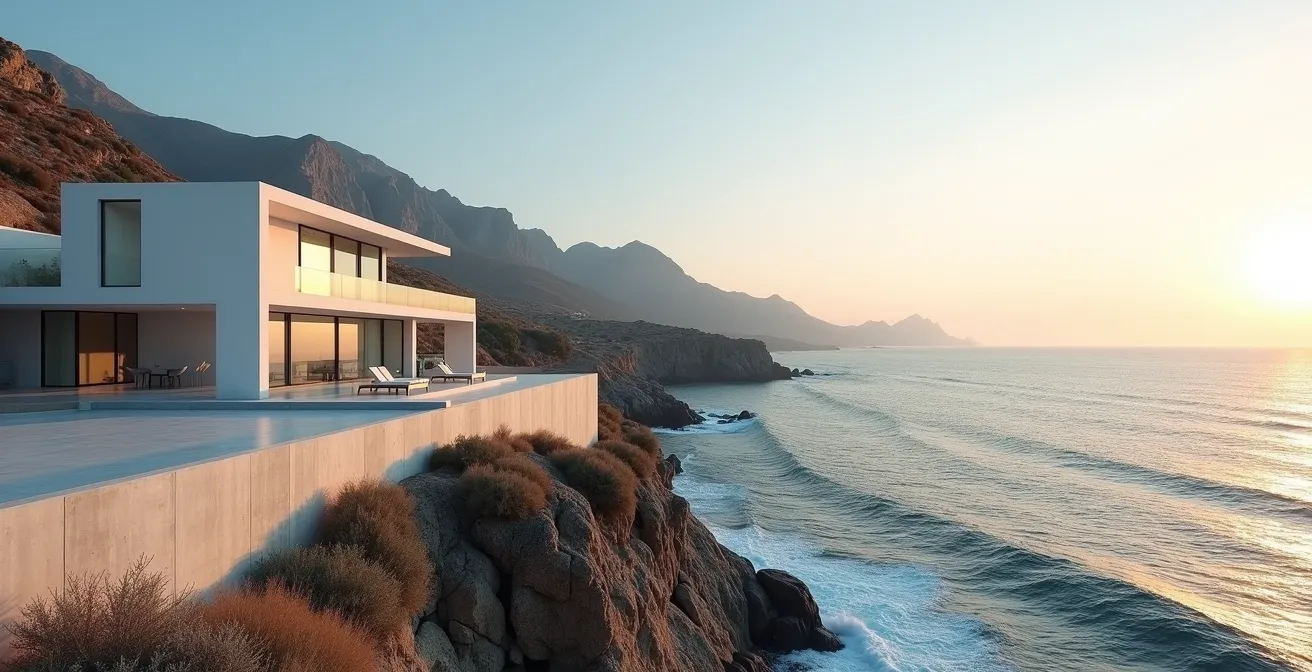
The 40% premium for a waterfront property is not a cost for a view; it’s a strategic investment in a superior asset class with quantifiable returns.
- Waterfront living delivers unparalleled privacy—a natural “moat” that inland properties cannot replicate.
- Direct water access is a tangible lifestyle asset, unlocking exclusive recreational and travel opportunities.
- Scarcity ensures these properties offer greater value resilience and appreciation potential compared to the general market.
Recommendation: Shift your perspective from viewing the premium as an expense to evaluating it as the price of entry for a multi-faceted lifestyle and financial asset.
As a discerning buyer, you’ve likely encountered the stark reality of the market: a villa with a water view carries a significant price tag, often 40% or more than a comparable inland property. The immediate question is always, “Is the view really worth that much?” It’s a valid query, and the conventional answers—scarcity, prestige, and simple aesthetics—while true, are incomplete. They fail to capture the fundamental difference in the asset you are acquiring. Viewing this premium as merely “paying for a view” is the most common mistake buyers make, leading them to underestimate the profound value proposition at hand.
The conversation around waterfront property often touches on the recreational benefits, like boating or morning swims. However, it rarely delves into the intricate financial and lifestyle mechanics that justify the price. The truth is, you are not just buying a home; you are investing in a collection of unique assets. These include a higher degree of privacy, exclusive access to a different mode of transport and leisure, and a more resilient store of value. This premium is less about the passive enjoyment of a vista and more about the active acquisition of a superior living experience and a robust investment vehicle.
The real key to understanding the 40% figure is to deconstruct it. Instead of a single surcharge, think of it as a portfolio of benefits: a premium for privacy, a premium for direct access, and a premium for long-term financial security. This guide will move beyond the superficial and dissect the tangible components that constitute the waterfront premium. We will explore the practical challenges and their high-tech solutions, compare distinct waterfront lifestyles, and reveal how to leverage this unique asset for both personal enjoyment and financial gain. It’s time to analyze why the water’s edge is not just a location, but a strategic advantage.
This article provides a comprehensive analysis of the factors that create the significant value premium for waterfront properties. We will explore everything from maintenance and privacy to lifestyle and legal considerations, offering a clear framework for your investment decision.
Summary: Deconstructing the Waterfront Property Premium
- How to prevent saltwater corrosion on your villa’s facade?
- Palm Jumeirah vs Saadiyat Island: Which beach lifestyle suits families?
- The privacy problem with finger-frond villas and how to solve it
- How to license your waterfront villa as a holiday home legally?
- When do waterfront listings peak in availability?
- How to plan a 3-day cruise to Musandam avoiding border delays?
- The anchoring mistake that destroys coral reefs and incurs fines
- How to navigate the maritime borders between UAE and Oman for a weekend trip?
How to prevent saltwater corrosion on your villa’s facade?
A primary concern for any prospective waterfront buyer is the relentless effect of the marine environment, specifically saltwater corrosion. This is a manageable aspect of ownership, not an unavoidable deterrent. Protecting your investment begins with understanding that standard construction materials and maintenance schedules are insufficient. A waterfront property requires a proactive, specialized approach to preservation, transforming maintenance from a chore into a sophisticated asset protection strategy. The goal is to ensure the villa’s facade remains as pristine as its view.
The salt-laden air, a hallmark of coastal living, is pervasive and aggressive towards metals, concrete, and even certain types of stone. However, modern materials science offers powerful countermeasures. Think beyond a simple coat of paint to advanced architectural solutions. For instance, using fiberglass composites and pultruded plastics for fixtures, railings, and window frames eliminates the risk of rust entirely. For critical structural elements, sacrificial anodes can be installed—small, highly active metal blocks that corrode in place of the structure they are protecting, acting as a shield for your home’s integrity.

As the image above illustrates, corrosion is a microscopic process that requires a macroscopic strategy. An effective defense is layered. It starts with selecting the right materials during construction or renovation and is maintained through a disciplined regimen. This includes monthly freshwater rinses of the entire facade to wash away salt deposits before they can cause damage. Furthermore, applying hydrophobic nano-coatings creates an invisible, water-repellent barrier on surfaces, a crucial step in a comprehensive defense. By viewing corrosion control as an integral part of the property’s value, you shift from a reactive mindset to one of proactive stewardship, ensuring the long-term beauty and structural soundness of your investment.
Palm Jumeirah vs Saadiyat Island: Which beach lifestyle suits families?
The term “waterfront” encompasses a wide spectrum of lifestyles, and choosing the right community is as critical as choosing the right house. For families, this decision often boils down to a comparison between a high-energy, amenity-rich environment and a low-energy, nature-focused one. In the UAE, the contrast between Dubai’s Palm Jumeirah and Abu Dhabi’s Saadiyat Island provides a perfect case study. One offers a vibrant, man-made hub of activity, while the other provides a serene, natural sanctuary. Understanding this distinction is key to aligning your property investment with your family’s desired way of life.
Palm Jumeirah represents the pinnacle of the high-energy waterfront community. It’s a marvel of engineering, dense with villas, hotels, and world-class entertainment. For families, this translates to unparalleled convenience: protected lagoons for safe swimming, extensive lifeguard services, and immediate access to yacht clubs, restaurants, and retail destinations. The trade-off, however, is a higher level of ambient noise from boats and tourist activity and generally higher maintenance costs associated with a high-density community. This is the choice for a family that thrives on vibrancy and wants a resort-style experience at their doorstep.
Conversely, Saadiyat Island embodies the low-energy, natural coastal lifestyle. It is designed around pristine, natural beaches and protected dune ecosystems, home to wildlife like the Hawksbill sea turtle. The lifestyle here is quieter, centered on nature trails, wildlife viewing, and the simple pleasure of an unspoiled coastline. While community amenities exist, they are more integrated into the natural landscape. For families, this means more variable beach conditions and a greater emphasis on self-directed activities. It’s an investment in tranquility and a direct connection with nature, appealing to those seeking an escape from the city’s bustle.
This following table breaks down the core differences, helping you quantify which “lifestyle asset” you are truly investing in. According to a comparative analysis of property values, both models command significant premiums, but the experience they deliver is fundamentally different.
| Factor | High-Energy (Man-made, Dense) | Low-Energy (Natural, Sparse) |
|---|---|---|
| Property Premium | 40-50% above inland | 30-40% above inland |
| Child Safety Features | Protected lagoons, lifeguard services | Natural beaches, variable conditions |
| Community Amenities | Yacht clubs, restaurants, retail | Nature trails, wildlife viewing |
| Noise Levels | High (boats, tourists) | Low (natural sounds) |
| Maintenance Costs | Higher due to density | Lower but more DIY |
The privacy problem with finger-frond villas and how to solve it
For many, the ultimate luxury is privacy, and this is a significant component of the waterfront premium. However, in densely packed communities like the fronds of Palm Jumeirah, proximity to neighbors can create privacy challenges from the sides, the water, and even the air. This “privacy problem” is not an unsolvable flaw but an engineering challenge that has been met with sophisticated, multi-dimensional solutions. Investing in a waterfront villa means having the ability to create a “privacy moat”—a combination of physical and technological barriers that secure your personal sanctuary without sacrificing the view.
Modern privacy solutions go far beyond simple fences or curtains. They address sightlines from every angle. For lateral privacy from neighbors, switchable smart glass is a game-changer, allowing windows to turn from clear to opaque with the touch of a button. For privacy from the water, the solution is not to build a wall but to use strategic landscaping. Creating landscaped berms with native coastal plants can block views from passing boats while adding natural beauty. A well-designed infinity pool edge can also double as a clever sight-line blocker from lower vantage points on the water.
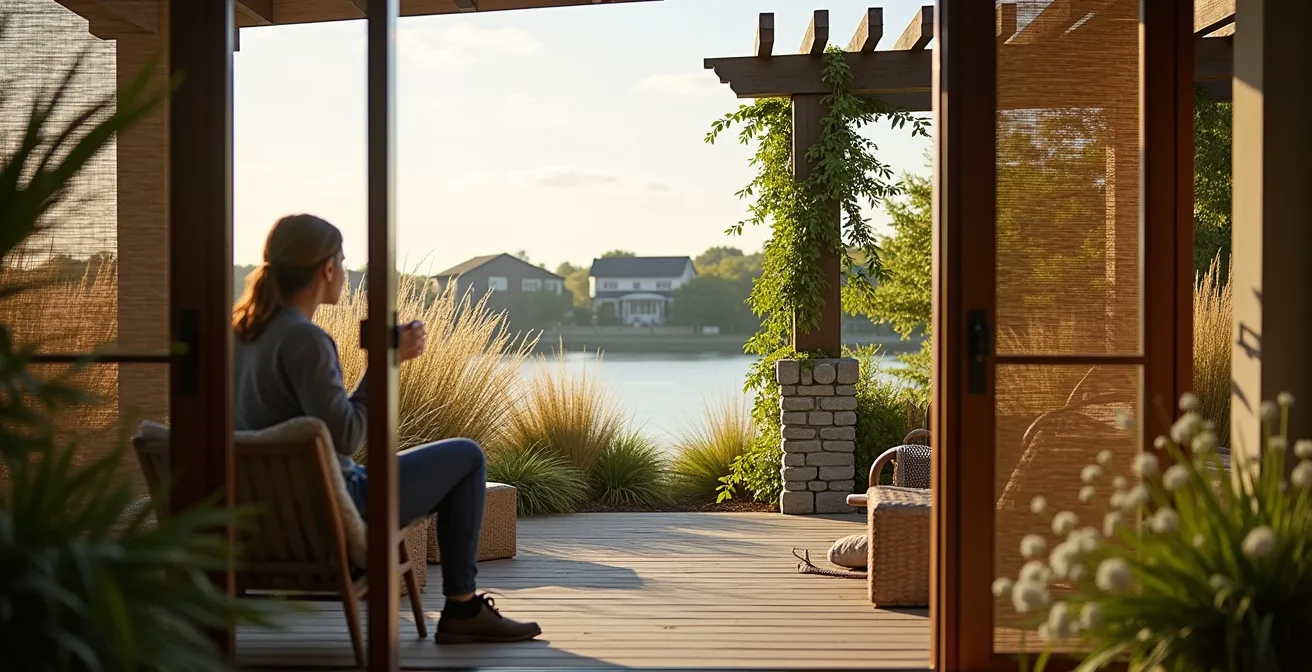
Perhaps the most modern threat to privacy comes from above, in the form of drones. Here, the solutions are equally cutting-edge. Residential drone detection systems can identify unauthorized aerial vehicles and automatically trigger privacy measures, such as extending retractable screens over patios and pools. Finally, acoustic privacy is addressed with directional sound panels that can be discreetly installed to block or absorb noise from passing watercraft. As one analysis notes, waterfront homes often have a higher appreciation potential, and investing in these advanced privacy features further solidifies that value by ensuring total peace of mind.
Your Action Plan: Auditing Your Waterfront Villa’s Lifestyle Signal
- Points of contact: List all channels where your property’s “lifestyle signal” is projected. This includes the visual appeal of the facade and dock, the perceived exclusivity of community amenities, and the quality of its online listing photography.
- Collecte: Inventory the existing elements that define this signal. Document the condition of the landscaping, the age and style of outdoor fixtures, and the specific rules of the homeowners’ association.
- Cohérence: Confront these elements with your desired lifestyle positioning. Does your goal of a “serene family retreat” conflict with the high-traffic community boat ramp or the prevalence of short-term rentals nearby?
- Mémorabilité/émotion: Identify what makes the property unique versus generic. Is it a one-of-a-kind sunset view, a unique architectural feature, or simply its location on a prestigious frond? This is the core of its emotional value.
- Plan d’intégration: Create a prioritized plan to close the gaps. This could involve upgrading to corrosion-resistant materials to signal modern quality, or installing smart-glass windows to enhance the feeling of exclusive privacy.
How to license your waterfront villa as a holiday home legally?
A key part of the investment calculation for a waterfront property is its potential to generate significant rental income. The allure of staying in a luxury villa with direct water access makes these properties highly sought-after on the short-term rental market. However, turning this potential into legal, profitable reality requires navigating a specific set of regulations that go beyond standard landlord-tenant laws. Licensing your villa as a holiday home is not just a bureaucratic step; it’s a strategic move to professionalize your asset and protect your investment from legal and financial liabilities.
The process begins with your local tourism authority, such as Dubai’s Department of Tourism and Commerce Marketing (DTCM). You must meet their quality standards, which often include specific safety equipment, minimum furnishing levels, and professional photography. This is where the initial investment pays dividends, as a well-appointed property not only passes inspection but also commands a higher nightly rate. But public law is only one layer. The covenants of your Homeowners’ Association (HOA) are equally, if not more, important. Many exclusive waterfront communities have strict rules limiting rental periods, the number of guests, and their access to shared amenities like beach clubs or marinas. Ignoring these can lead to hefty fines and a loss of rental permits.
Furthermore, the legal and financial structure of your ownership is critical. Holding the property in a dedicated Limited Liability Company (LLC) is a common strategy for high-net-worth owners. This structure creates a legal shield, separating your personal assets from any potential liabilities arising from the rental business, such as a guest-related accident. Insurance is another crucial consideration. A standard homeowner’s policy is inadequate; you will need commercial-grade holiday home insurance with specific riders covering liabilities related to water activities, private docks, and any watercraft provided for guest use. Properly structured, your waterfront villa transforms from a personal residence into a high-performing, income-generating asset.
When do waterfront listings peak in availability?
For a strategic buyer, timing the market is everything. Unlike the broader real estate market, the waterfront segment operates on its own distinct seasonal and economic cycles. Understanding when inventory peaks can provide a significant negotiating advantage. It’s not as simple as buying in the “off-season.” The supply of these unique properties is driven by a different set of factors related to the lifestyle and demographics of their owners. As a savvy investor, you should be watching for leading indicators that signal when more properties are likely to become available.
Peak availability for waterfront listings is often tied to the end of a region’s prime season. Owners enjoy their property during the best weather and then consider listing it as the season changes. However, more subtle indicators can give you an edge. For instance, monitoring the turnover rate at local yacht club memberships can be a powerful predictor. A spike in memberships changing hands often precedes a wave of property sales as owners’ lifestyles evolve. Similarly, a declining waitlist for slips at local marinas can suggest that boat owners are selling their vessels, a move often connected to selling their waterfront homes.
Another sophisticated approach is to track local zoning board applications. An increase in permits for seawall repairs or major dock upgrades can signal that long-time owners are preparing to sell. These owners are investing in improvements to maximize their sale price, and getting ahead of these listings can be advantageous. Finally, pay close attention to properties that have been on the market for over 90 days. In the high-demand waterfront sector, a longer on-market duration often points to a motivated seller, creating a prime opportunity for negotiation. By looking beyond simple seasonality and analyzing these underlying trends, you can position yourself to acquire a prime waterfront asset on the most favorable terms.
How to plan a 3-day cruise to Musandam avoiding border delays?
One of the most compelling aspects of the waterfront premium is “access-as-an-asset.” This is the tangible ability to unlock experiences that are simply unavailable to inland property owners. A prime example for residents in the UAE is the freedom to embark on a weekend cruise to Oman’s stunning Musandam Peninsula directly from your private dock. This is the epitome of the waterfront lifestyle. However, this freedom comes with the responsibility of meticulous planning, particularly when it comes to navigating international maritime borders smoothly.
A seamless trip to Musandam is not about luck; it’s about leveraging technology and preparation to mitigate potential delays. Before you even cast off, your planning should be digital. The foundation of this is having up-to-date nautical charts; an app like Navionics provides real-time chart updates and hazard alerts directly on your tablet. Next, you must monitor vessel traffic. Using an AIS (Automatic Identification System) vessel tracking app allows you to see the real-time position, course, and speed of commercial ships and other yachts, helping you anticipate congestion in border zones.
Weather is another critical variable. A sudden storm system can not only make the journey uncomfortable but also shut down or delay processing at border control points. Modern weather routing apps can analyze forecasted conditions along your entire route and suggest optimal departure times and paths to avoid adverse weather. Finally, administrative delays are the most common hurdle. Having all your documents digitized and ready is essential. This includes vessel registration, insurance policies with appropriate regional coverage, and a complete crew and passenger list. This preparation transforms a potentially stressful border crossing into a smooth, efficient formality, allowing you to focus on the breathtaking fjords that await. This is what you’re truly buying with the waterfront premium: not just a home, but a launchpad to extraordinary adventures. The appreciation rate for waterfront homes often outpaces the general market because of these invaluable lifestyle assets.
Key Takeaways
- The waterfront premium is a composite investment in privacy, exclusive access, and long-term financial resilience.
- Proactive maintenance with modern materials and technology transforms environmental challenges like corrosion into manageable tasks.
- Waterfront communities offer distinct lifestyles; choosing between high-energy (amenity-rich) and low-energy (nature-focused) is critical for family satisfaction.
- Privacy in dense waterfront areas is a solvable issue using advanced solutions like smart glass, strategic landscaping, and drone detection.
- The ability to navigate maritime borders for leisure travel is a prime example of “access-as-an-asset”—a tangible lifestyle return on your investment.
The anchoring mistake that destroys coral reefs and incurs fines
Ownership of a waterfront property, especially one with direct boating access, extends beyond the boundaries of the property line. It comes with a custodial responsibility for the marine environment you enjoy. This is a core part of the prestige and value of the waterfront lifestyle. One of the most critical aspects of this responsibility is proper anchoring. A single, careless anchoring mistake—dropping an anchor onto a coral reef—can destroy decades of coral growth in seconds, damage a fragile ecosystem, and result in significant fines from environmental authorities. Responsible ownership means embracing smart anchoring practices and technology.
The traditional method of “guess and drop” is no longer acceptable in sensitive marine areas. The most damaging mistake is anchoring directly on coral or in seagrass beds instead of in clear sand. The anchor and its chain can drag across the bottom as the boat swings with wind and currents, causing immense physical damage. This not only harms the environment but also reflects poorly on the yachting community and can lead to increased regulations that affect all boat owners. The solution lies in a combination of awareness and technology.
Modern marine technology provides the tools to eliminate this risk entirely. High-definition sonar paired with applications like SonarChart allows you to see a detailed map of the seabed composition before you ever release your anchor, making it easy to identify and target safe, sandy anchoring spots. For the ultimate in environmental protection, some boat owners are investing in GPS-based Dynamic Positioning Systems. These systems use thrusters and GPS to hold a vessel in a precise location without using an anchor at all, offering anchor-free station keeping. As a property owner, supporting community-funded permanent mooring buoys in popular anchorages is another powerful way to protect the local ecosystem. According to an analysis of waterfront investments, communities that prioritize environmental stewardship often see a corresponding increase in property values, making eco-conscious boating a direct investment in your community’s desirability.
How to navigate the maritime borders between UAE and Oman for a weekend trip?
The ultimate expression of the waterfront premium is the ability to treat international borders not as barriers, but as gateways to new experiences. A weekend trip from your villa in the UAE to the waters of Oman is a perfect example. This journey, however, requires more than just a capable vessel; it requires a clear understanding of maritime law and jurisdiction. Navigating these invisible lines on the water is the final piece of the puzzle, transforming you from a simple homeowner into a sophisticated global citizen. This is where the true value of the waterfront lifestyle is fully realized.
When you leave the coast, you enter a world governed by a complex web of international agreements. The first thing to understand is the concept of an Exclusive Economic Zone (EEZ). Even when in what feels like open international waters, an EEZ grants the adjacent coastal state—like Oman—exclusive rights over economic resources, including fishing. This means your right to fish may be restricted, and ignorance of the law is no excuse. Your vessel’s flag state (the country where it is registered) is also a critical factor. It determines which international treaties apply to your vessel, affecting everything from documentation requirements to processing times at your port of entry.
Insurance is another vital consideration that is often overlooked. Many marine insurance policies have strict geographic limits. Crossing certain lines of longitude or latitude without a specific international cruising rider on your policy could void your coverage entirely, leaving you personally and financially exposed in the event of an accident. Successfully navigating these complexities is a testament to the sophisticated lifestyle you have invested in. It is the culmination of all the other factors: the right property, the right vessel, and the right knowledge. It confirms that the 40% premium was never just about a view; it was about purchasing access to a world of unparalleled freedom and adventure.
The journey from questioning the 40% premium to understanding its profound value is a shift in perspective. It’s about recognizing that you are not merely buying square footage; you are acquiring a unique and powerful lifestyle asset. To take the next step in exploring how a waterfront property can redefine your life and enhance your investment portfolio, a personalized consultation is the logical next step.
Frequent questions about The Waterfront Property Premium
What special insurance is required for waterfront holiday rentals?
You’ll need specific riders for amenities like private docks, boats, and water sports equipment, plus enhanced liability coverage for water-related accidents.
Should I hold the property in an LLC or trust?
An LLC structure shields personal assets from rental-related liabilities, crucial for high-net-worth waterfront property owners.
How do HOA rules affect short-term rentals?
Community covenants can be more restrictive than public law, often limiting rental periods, guest access to amenities, and noise levels.
How does flag state affect border crossing rights?
Your vessel’s flag state determines which international agreements apply, affecting processing time and documentation requirements at borders.
What are the insurance implications of crossing maritime borders?
Many policies have geographic limits; crossing certain longitude/latitude lines without a rider voids coverage.
How do EEZs affect fishing and resource rights?
Even in international waters, exclusive economic zones restrict certain activities to citizens of the coastal state.