
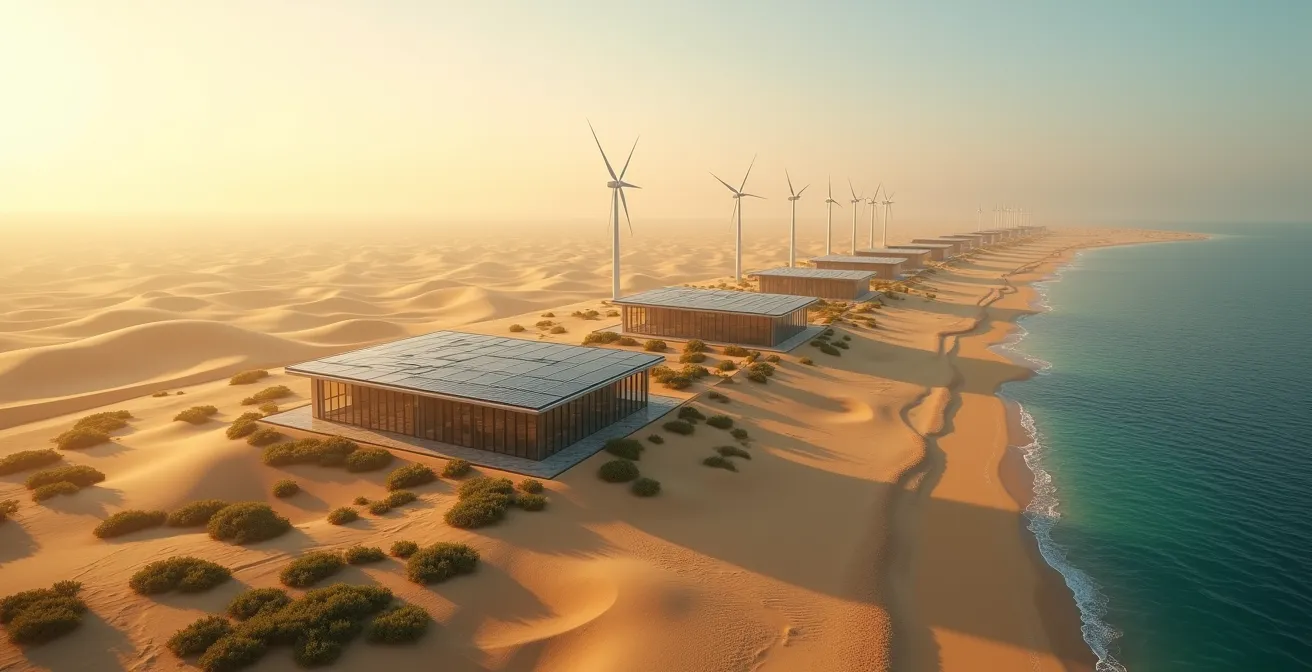
The “Net Zero 2050” initiative is far more than a high-level climate policy; it’s a concrete blueprint actively reshaping the fabric of daily life in the UAE. This strategy translates abstract national goals into tangible changes you can see and feel, from mandatory recycling sorting in your community to the energy source powering your home. It’s a fundamental shift in civic infrastructure designed to integrate sustainability into every resident’s routine, transforming individual actions into collective progress toward a carbon-neutral future.
For many residents, the term “Net Zero 2050” might sound like a distant, abstract goal discussed in boardrooms and international forums. It’s easy to hear about massive investments in renewable energy or ambitious emissions targets and feel disconnected from the process. The common narrative focuses on mega-projects—gleaming solar farms stretching across the desert or advanced nuclear power plants—that, while crucial, seem to exist in a separate world from our daily commutes, grocery shopping, and community life.
However, this perspective misses the most profound aspect of the initiative. The true genius of the Net Zero 2050 strategy lies not just in its grand scale, but in its intricate application at the human level. The real question isn’t just “What is the government building?” but rather, “How are these policies designed to reshape my personal environment and influence my daily choices?” The answer is that these changes are already underway, subtly and overtly altering the world around us.
This policy is a visionary project of weaving sustainability into the very DNA of the nation’s civic infrastructure. It’s about more than just technology; it’s about behavioral nudges, economic incentives, and new community standards. The single-use plastic bag fee wasn’t just a tax; it was the first step in a long-term plan to re-engineer consumer habits. The color-coded bins appearing in residential towers aren’t just for decoration; they represent a fundamental change in how the nation manages its resources, turning every household into a cog in a circular economy.
This article will deconstruct the Net Zero 2050 initiative from the ground up. We will move beyond the headlines to explore the specific, tangible ways this national ambition is intersecting with your life. We will examine how you can participate, why certain buildings are becoming more desirable, what powers your home, and how visionary urban projects are adapting to real-world challenges. This is the story of how a nation’s climate goal becomes your everyday reality.
To provide a clear roadmap of these transformative changes, this article breaks down the initiative’s impact into key areas affecting residents directly. The following sections explore everything from community-level environmental programs to the evolving standards of the buildings we inhabit.
Summary: The UAE’s Net Zero 2050 and Your Daily Reality
- How to Join Mangrove Planting Initiatives in Abu Dhabi?
- Why Sorting Your Recycling is Becoming Mandatory in Residential Communities?
- Solar vs Nuclear: What Powers Your Home in the Emirates?
- The “Eco-City” Marketing Trap: What Makes a District Truly Sustainable?
- When Will Single-Use Plastics Be Completely Banned in Retail?
- Estidama Pearl vs LEED: Which Certification Matters More in Abu Dhabi?
- What Innovation Grants Are Available for Green Tech Startups?
- Why LEED Platinum Buildings Command Higher Rents Than Standard Towers?
How to Join Mangrove Planting Initiatives in Abu Dhabi?
Beyond simply reducing emissions, a core part of the Net Zero strategy involves actively enhancing natural carbon sinks. In Abu Dhabi, mangrove forests are a critical tool in this effort. These coastal ecosystems are powerhouses of carbon sequestration, and public participation is a key component of the Emirate’s plan to expand them. Engaging in these initiatives offers residents a direct, hands-on way to contribute to national climate goals. Studies by the Environment Agency – Abu Dhabi (EAD) have revealed that local mangrove trees in Abu Dhabi store carbon at a rate of 0.5 tonnes per hectare per year, making every tree planted a tangible investment in a healthier climate.
For residents and even tourists, joining these efforts has been streamlined. Organizations like the Emirates Marine Environmental Group (EMEG) regularly organize volunteer events, making it accessible for anyone to spend a day contributing. These events are not just about labor; they are educational, teaching participants the precise techniques for planting seedlings to ensure their survival and growth. The process itself is a lesson in ecology, requiring volunteers to plant saplings about one meter apart in the silky coastal sand, giving them the best chance to thrive.
The opportunities to get involved extend beyond traditional planting days. The strategy embraces technology through innovative approaches like drone seeding programs, often run in partnership with local universities. This high-tech method allows for the rapid planting of vast, often inaccessible areas. For those who cannot participate physically, there are even digital volunteering opportunities, such as helping analyze satellite imagery to monitor the growth and health of newly planted mangrove forests. This “policy-to-pavement”—or in this case, policy-to-shoreline—approach empowers individuals to become active stewards of their local environment.
Ultimately, these initiatives demonstrate that contributing to Net Zero 2050 is not solely the responsibility of corporations or government bodies. It is a collective effort where individual action, whether planting a sapling or analyzing data, directly supports the overarching vision.
Why Sorting Your Recycling is Becoming Mandatory in Residential Communities?
The appearance of multi-colored recycling bins in residential communities across the UAE is one of the most visible signs of the Net Zero 2050 initiative in action. This shift from optional to mandatory sorting is a critical behavioral nudge designed to build a circular economy from the ground up. The primary goal is to drastically reduce the amount of waste sent to landfills, which are significant sources of methane, a potent greenhouse gas. By separating materials like plastic, paper, glass, and aluminum at the source, the nation can dramatically increase recycling rates and reduce the need for virgin materials, which carry a heavy carbon footprint in their production.
This policy addresses a fundamental piece of the emissions puzzle. While large-scale industrial and energy sectors are often in the spotlight, waste management is a crucial area where individual behavior has a massive collective impact. Implementing mandatory sorting is a direct intervention to change that behavior, transforming waste disposal from a mindless chore into a conscious act of resource management. This hands-on approach makes every resident an active participant in the country’s sustainability journey. It is a clear example of policy creating new civic infrastructure that relies on public cooperation for its success.
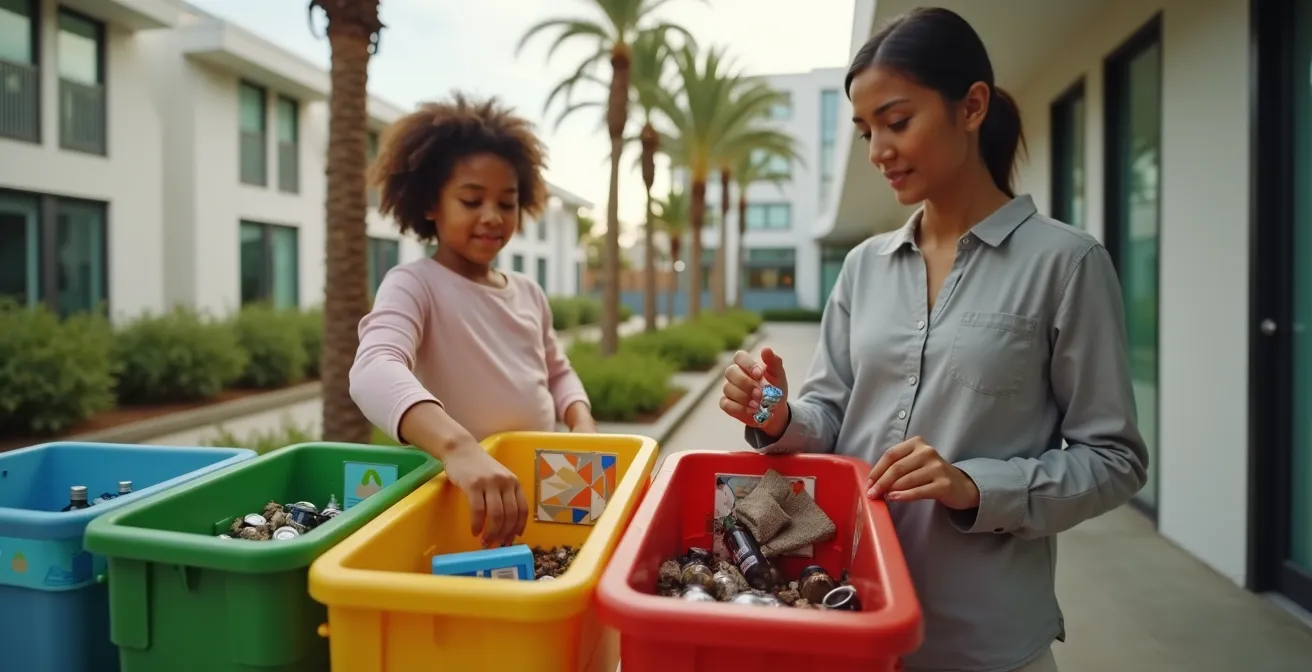
The system’s effectiveness hinges on education and simplicity. The clear color-coding and placement of bins are designed to make the process as intuitive as possible. This is not just about waste; it’s about fostering a nationwide mindset of resourcefulness. As this system becomes more entrenched, it lays the groundwork for more advanced circular economy initiatives, such as producer responsibility schemes and the development of local industries that use recycled materials. It’s a foundational step that turns millions of individual households into the first link of a new, more sustainable supply chain.
Therefore, when you sort your recyclables, you are not just complying with a building rule; you are executing a key component of a national economic and environmental strategy, directly contributing to the Net Zero 2050 vision from your own kitchen.
Solar vs Nuclear: What Powers Your Home in the Emirates?
A central pillar of the Net Zero 2050 initiative is the radical decarbonization of the country’s power grid. For decades, the UAE’s electricity was generated almost exclusively from natural gas. Today, the answer to “What powers your home?” is increasingly complex and clean, resting on a powerful dual strategy of solar and nuclear energy. These two technologies form the bedrock of the nation’s clean energy transition, providing a one-two punch of reliable, carbon-free power. The Barakah Nuclear Energy Plant provides a consistent, 24/7 baseload of power, ensuring grid stability regardless of weather conditions, while massive solar parks like the Mohammed bin Rashid Al Maktoum Solar Park in Dubai harness the region’s most abundant natural resource—sunlight.
This diversified approach is a strategic choice. Nuclear power offers high-capacity, weather-independent energy, while solar offers low-cost, distributed generation. Together, they create a resilient and robust grid that can significantly reduce reliance on fossil fuels. This means that with each passing year, the electricity powering your air conditioning, charging your phone, and lighting your home carries a smaller and smaller carbon footprint. Residents are becoming consumers of clean energy by default, a direct result of this top-down infrastructure investment.
However, the vision extends beyond just solar and nuclear. The UAE is aggressively positioning itself as a future leader in a third critical energy vector: green hydrogen. Hydrogen, produced using renewable electricity, is seen as the key to decarbonizing heavy industry and long-haul transport. The national strategy is ambitious, as the UAE aims to scale up local hydrogen production to 1.4 million tons per annum by 2031. While you won’t be plugging your home directly into a hydrogen pipeline anytime soon, this forward-looking investment ensures the nation’s long-term energy security and economic competitiveness in a post-fossil fuel world.
This three-pronged strategy—solar for daytime peak, nuclear for baseload, and hydrogen for the future—is how Net Zero 2050 is rewiring the very energy that underpins modern life in the Emirates, making sustainability an invisible but constant presence in every home.
The “Eco-City” Marketing Trap: What Makes a District Truly Sustainable?
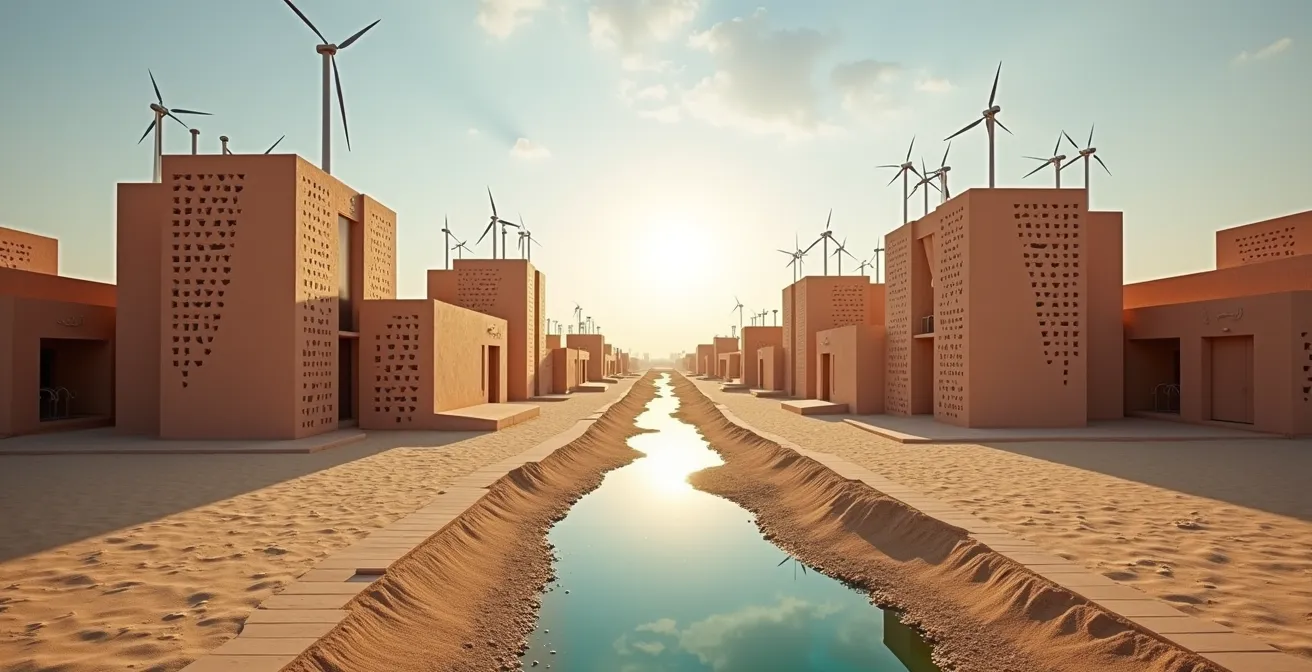
The concept of the “eco-city” has been a powerful marketing tool globally, and the UAE is home to one of the world’s most famous examples: Masdar City in Abu Dhabi. Initially launched with the audacious goal of being the first zero-carbon, zero-waste city, Masdar provides a crucial lesson in the difference between a marketing vision and the complex reality of sustainable urban development. While it remains a vital hub for green tech and innovation, its journey highlights the “eco-city trap”: the danger of setting absolutist goals that are difficult to achieve in practice. True sustainability is less about a perfect, static endpoint and more about an adaptive, resilient process.
The evolution of Masdar’s own goals is telling. The project’s leaders eventually made a “vision readjustment,” publicly shifting the target from “zero-carbon” to “low-carbon.” This was a pragmatic response to real-world challenges, including the global financial crisis of 2008, which impacted the original development model. As anthropologist Dr. Gokçe Günel noted in her analysis for the Pulitzer Center, the initial plan to build for 50,000 people and then sell to companies and individuals proved to be a difficult model to execute post-crisis. This experience demonstrates that a truly sustainable district is not one that claims perfection, but one that is flexible and learns from its setbacks.
So, what makes a district genuinely sustainable beyond the marketing? It comes down to integrated systems that prioritize livability and resource efficiency. This includes:
- Passive Design: Architecture that naturally reduces the need for air conditioning through shading, orientation, and materials, as seen in Masdar’s narrow, shaded streets.
- Integrated Transport: Prioritizing walkability and public transit over private cars.
- Water and Waste Loops: Systems for treating and reusing greywater and for comprehensive waste management within the district.
- Mixed-Use Development: Creating a vibrant community where people can live, work, and socialize without long commutes.
Masdar’s story is not one of failure, but of necessary evolution. It serves as a vital, real-world laboratory, teaching valuable lessons that inform the development of more pragmatic and resilient sustainable communities across the UAE, moving beyond the trap of utopian labels.
When Will Single-Use Plastics Be Completely Banned in Retail?
The move away from single-use plastics is a highly visible and impactful component of the Net Zero 2050 initiative, directly affecting every resident’s shopping experience. While a complete, all-encompassing ban hasn’t happened overnight, the UAE is following a globally recognized and proven strategy of phased implementation. This approach is designed to gradually shift consumer behavior and allow businesses time to adapt, minimizing economic disruption while maximizing environmental impact. The journey began with a nominal fee on single-use plastic bags in major retailers, a classic behavioral nudge that immediately demonstrated the policy’s intent.
The timeline for a complete ban is unfolding in logical stages. After the initial focus on shopping bags, the policy is expanding to target other problematic plastic items. The next phases typically address items like plastic cutlery, straws, stirrers, and foam food containers. These are often the easiest to replace with sustainable alternatives like wood, paper, or reusable options. The final, most complex stage will involve tackling plastic packaging on consumer goods, a challenge that requires close collaboration with manufacturers and a significant redesign of supply chains. While a definitive date for a 100% ban is a moving target dependent on these complex factors, the clear direction of policy indicates a comprehensive phase-out over the next several years.
From a policy analyst’s perspective, this staggered approach is crucial for long-term success. It creates a predictable pathway for innovation, spurring the market for reusable bags, containers, and alternative packaging materials. It also serves as a continuous public education campaign, keeping the issue of plastic pollution at the forefront of the public consciousness. Each new phase acts as a reminder of the national commitment and reinforces the new social norm. It’s a strategic process of making the sustainable choice the easiest—and eventually, the only—choice for consumers and retailers alike.
Ultimately, the question is not just “when,” but “how.” The UAE’s approach ensures that by the time a complete ban is in place, the civic and commercial infrastructure to support a plastic-free retail environment will already be firmly established, making the final transition seamless.
Estidama Pearl vs LEED: Which Certification Matters More in Abu Dhabi?
For anyone living or working in a new building in Abu Dhabi, the concept of green building certification is becoming increasingly relevant. Two main standards dominate the conversation: LEED (Leadership in Energy and Environmental Design), a global benchmark, and Estidama Pearl Rating System, a framework developed specifically for Abu Dhabi. While both aim to promote sustainability, understanding their differences is key to understanding the local real estate landscape. The most critical distinction is their status: in Abu Dhabi, Estidama is mandatory for all new developments, while LEED is an optional, market-driven certification pursued for its international recognition.
This mandatory nature makes Estidama the single most influential standard shaping Abu Dhabi’s built environment. It was designed from the ground up to address the specific environmental challenges of the UAE’s arid climate. As a result, it places a heavy emphasis on water conservation—a critical issue in the region—whereas the more generic LEED framework tends to prioritize energy efficiency. Furthermore, Estidama incorporates unique “livability” credits that reward the creation of community spaces and the preservation of cultural heritage, aspects not as explicitly prioritized in the global LEED standard.
The following table, based on comparative analyses, breaks down the key differences between the two systems.
| Aspect | Estidama Pearl | LEED |
|---|---|---|
| Status in Abu Dhabi | Mandatory for all new developments | Optional, market-driven |
| Climate Adaptation | Tailored to UAE’s arid climate | Generic international framework |
| Key Focus | Water conservation priority | Energy efficiency priority |
| Cultural Elements | Livability credits for community spaces | Standard occupant comfort metrics |
| Recognition | Regional/National | Global |
So which matters more? For ensuring a baseline of sustainable construction across the entire emirate, Estidama is unquestionably the most important driver. However, for landmark projects seeking to attract multinational corporations, achieving a high LEED rating (like Platinum) remains a powerful statement of global excellence. In fact, the most ambitious projects, like the CO-LAB building in Masdar City, achieve both—satisfying local mandates while also claiming international prestige by achieving a Zero Energy rating and LEED Platinum simultaneously.
For the average resident, the practical result is a built environment that is progressively more water- and energy-efficient, a direct outcome of Estidama’s mandatory framework driving the Net Zero vision building by building.
What Innovation Grants Are Available for Green Tech Startups?
The Net Zero 2050 initiative is not just a plan for reduction and regulation; it is a powerful engine for innovation. A key part of the strategy is to foster a vibrant ecosystem of startups and entrepreneurs developing the next generation of climate solutions. To this end, a robust infrastructure of grants, accelerator programs, and protected testbeds has been established to support green tech ventures. For aspiring innovators, this represents a golden opportunity to secure funding and mentorship to bring their ideas to life, directly contributing to the nation’s sustainability goals.
The funding landscape is diverse, with several key institutions acting as gateways for green tech startups. These programs provide more than just capital; they offer access to networks, regulatory sandboxes for pilot projects, and guidance from industry leaders. This support is critical for turning a promising concept into a viable commercial product. For example, the government’s investment in large-scale infrastructure like the region’s first commercial carbon-capture facility, which captures around 800,000 tonnes of CO2 annually, creates demand and a real-world test environment for startups specializing in Carbon Capture, Utilization, and Storage (CCUS) technologies.
Navigating these opportunities is the first step for any green entrepreneur. The following checklist outlines the primary channels for accessing funding and support within the UAE’s burgeoning climate tech ecosystem.
Your Action Plan: Securing Green Tech Funding in the UAE
- Mohamed bin Rashid Innovation Fund (MBRIF): Apply for early-stage funding with a focus on clean energy and sustainability innovations.
- Hub71 Tech Ecosystem Programs: Access accelerator programs specifically for climate tech startups in Abu Dhabi.
- Dubai Future Foundation: Participate in challenge-based funding for solutions addressing Net Zero goals.
- Dtec’s SANDBOX Incubator: Join early-stage incubation with mentorship from industry leaders.
- Masdar City Free Zone: Leverage protected testbeds and regulatory sandboxes for green tech pilots.
This framework of support transforms the abstract goal of innovation into a clear, actionable pathway for individuals and small companies. It ensures that the solutions needed to achieve Net Zero are not just imported, but are also developed organically within the region.
This proactive cultivation of a green tech startup culture is one of the most visionary aspects of the 2050 plan, aiming to create not just a sustainable nation, but also a leading global hub for climate solutions.
Key Takeaways
- The Net Zero 2050 initiative is a practical plan creating tangible changes in daily life, not just an abstract policy.
- Individual participation is key, enabled through new civic infrastructure for recycling, volunteering, and energy consumption.
- A dual focus on local mandates (Estidama) and global standards (LEED) is raising the sustainability baseline of the entire built environment.
Why LEED Platinum Buildings Command Higher Rents Than Standard Towers?
As the UAE’s urban landscape becomes greener, a clear economic trend is emerging: buildings with top-tier sustainability ratings, like LEED Platinum, are commanding a significant rental premium. This phenomenon, which we can call the “sustainability premium,” is not merely about altruism or marketing. It is driven by a convergence of tangible operational savings and powerful corporate imperatives. For residents and businesses, this trend is reshaping the definition of a “prime” location, where environmental performance is becoming as important as address or amenities.
The first driver is straightforward economics. LEED Platinum buildings are designed for hyper-efficiency. They use advanced technologies and passive design strategies to drastically reduce operational costs. For example, landmark projects like RMJM’s Innovation Hub are designed to use 40% less energy and water compared to conventional buildings. For a corporate tenant, these savings on utility bills can be substantial, directly offsetting a portion of the higher rent and improving their bottom line. The premium rent, in this sense, is an investment in long-term operational efficiency and cost predictability.
The second, and increasingly dominant, driver is the rise of corporate Environmental, Social, and Governance (ESG) reporting. For global companies, sustainability is no longer a peripheral concern but a core part of their brand identity and fiduciary duty. As a report from AB Capital Services on the UAE’s Net Zero strategy highlights, leasing a top-certified green space has become a non-negotiable requirement for many. The report states, “For multinational companies, leasing a LEED Platinum space is no longer a ‘nice-to-have’ but a requirement for their global Environmental, Social, and Governance (ESG) reporting and brand image.” Leasing such a space is a tangible, reportable action that demonstrates their commitment to sustainability to investors, customers, and employees.
For multinational companies, leasing a LEED Platinum space is no longer a ‘nice-to-have’ but a requirement for their global Environmental, Social, and Governance (ESG) reporting and brand image.
– AB Capital Services, UAE Net Zero 2050 Strategy Report
This demand from high-value tenants creates a virtuous cycle: developers are incentivized to build higher-quality, greener buildings, which in turn elevates the sustainability baseline of the entire market. The rent premium is simply the market price for operational efficiency, brand alignment, and future-proofing one’s business, making it a key economic pillar of the Net Zero 2050 vision.