

The critical mistake founders make is pitching Hub71 and DIFC FinTech Hive as if they were interchangeable. They are not. They represent two fundamentally different investment cultures.
- Abu Dhabi’s Hub71 operates with a “Sovereign Mindset,” investing in a long-term, diversified national portfolio of deep tech and strategic assets.
- Dubai’s DIFC FinTech Hive embodies a “Merchant Mindset,” focusing on transactional, market-ready solutions with clear, fast ROI, especially within financial services.
Recommendation: Your success depends less on your pitch deck and more on aligning your startup’s core DNA with the right capital philosophy. Choose the ecosystem that matches your long-term vision, not just the one with the biggest headline funding number.
For any founder looking to break into the Middle East, the UAE presents a dazzling opportunity. The real challenge, however, isn’t just getting a foot in the door; it’s understanding which door to knock on. Many approach Abu Dhabi’s Hub71 and Dubai’s DIFC FinTech Hive with the same pitch, treating them as two similar entry points into a monolithic “UAE market.” This is a fundamental, and often fatal, miscalculation. They look at the impressive funding figures, the world-class infrastructure, and assume the application process is a simple box-ticking exercise.
The common advice to “build a strong team” or “have a solid MVP” is true, but it misses the crucial context. The reality is that these two giants of the UAE startup ecosystem are driven by profoundly different investment philosophies, or what I call their “ecosystem DNA.” Pitching to Hub71 with a mindset geared for DIFC (and vice-versa) is like speaking the wrong language. You might be fluent, but your message will be lost in translation. It’s not about having a better product; it’s about achieving capital alignment.
But what if the key to unlocking funding wasn’t just in what you pitch, but in understanding the deep-seated “why” behind the capital you’re seeking? This guide moves beyond the surface-level comparisons. We will deconstruct the “Sovereign Mindset” of Abu Dhabi and the “Merchant Mindset” of Dubai. By understanding these core differences, you will learn not just how to pitch, but how to strategically align your venture with the ecosystem that is intrinsically built to support your specific path to success. This is the insider’s framework for navigating the UAE’s dynamic and dual-natured funding landscape.
This article will dissect the strategic nuances between these two premier hubs, offering a clear roadmap for founders. You will discover the distinct expectations, from application to long-term growth, that define each ecosystem.
Summary: Pitching Hub71 vs. DIFC: A VC Scout’s Guide to the UAE’s Investment Codes
- The Application Mistake That Gets 90% of Startups Rejected
- Tech Startups vs Logistics: Where is the Highest ROI for 2025?
- When to Raise Your Seed Round: Before or After MVP Launch?
- Local Talent vs Remote Devs: Which is More Cost-Effective for UAE Startups?
- How to Patent Your Software Algorithm in the UAE?
- What Innovation Grants Are Available for Green Tech Startups?
- How Many Visas Do You Actually Get with a Flexi-Desk Package?
- Why Is the UAE the Safest Haven for Foreign Capital in the Middle East Today?
The Application Mistake That Gets 90% of Startups Rejected
The most common reason for rejection isn’t a weak pitch deck or a flawed financial model; it’s a fundamental misalignment with the ecosystem’s core purpose. Founders often see the impressive headline numbers and apply without first decoding the investor’s DNA. The competition is fierce, and selection is about strategic fit above all else. For instance, Hub71’s 2024 selection data shows that only 1.5% of the 3,100+ applications were accepted. This isn’t just about filtering for quality; it’s about curating a portfolio.
This curation reflects Abu Dhabi’s “Sovereign Mindset.” As an arm of a strategic sovereign wealth agenda, Hub71 isn’t just making bets on individual companies; it’s building a diversified, long-term national asset portfolio. They are looking for startups that can contribute to Abu Dhabi’s economic diversification, build local expertise, and hold defensible, long-term value (like deep tech IP). In contrast, Dubai’s DIFC FinTech Hive operates with a “Merchant Mindset.” Rooted in Dubai’s history as a fast-paced trading hub, it seeks market-ready solutions, especially in finance, that can be quickly integrated into existing commercial ecosystems for clear, measurable ROI. They want to see a clear path to a transaction, a partnership, or a market-share victory.
The mistake, therefore, is pitching a rapid-growth, transactional fintech app to Hub71 without a deep tech or strategic angle, or pitching a long-gestation, capital-intensive R&D project to DIFC without a clear, immediate application for their banking partners. Understanding this difference is the first and most critical step.
Pre-Pitch Self-Audit: Are You Aligned?
- Hub71 Alignment: Is my product market-tested with a strong founding team, designed for early or growth stages, and am I prepared for an equity trade (SAFE note) for up to AED 750,000 in funding?
- DIFC FinTech Hive Alignment: Do I have a minimum viable product specifically tailored for financial services, and can I demonstrate a robust understanding of regulatory frameworks and MENA scaling potential?
- Process Readiness: Am I prepared for a rigorous online submission, a thorough multi-stage review, and a live pitch session to a panel of seasoned experts, regardless of the program?
- Strategic Fit: Does my company’s long-term vision align more with building a strategic national asset (Hub71) or capturing a specific market opportunity in financial services (DIFC)?
- Pitch Focus: Is my pitch narrative centered on long-term technological defensibility (for Hub71) or on immediate market traction and integration potential (for DIFC)?
Failing to self-audit against these distinct philosophies means you’re likely wasting your time and resources applying to the wrong ecosystem.
Tech Startups vs Logistics: Where is the Highest ROI for 2025?
While the UAE’s startup ecosystem is heavily tech-focused, with recent data suggesting 58% of startups fall into this category, the question of ROI is more nuanced. The highest return isn’t in a specific sector, but in the alignment of your sector with the right ecosystem’s investment thesis. A logistics-tech startup might find a better fit in Dubai, which leverages its world-class ports and trade infrastructure, while a deep-tech AI company will resonate more strongly with Abu Dhabi’s strategic goals.
The “Sovereign Mindset” of Abu Dhabi (Hub71) prioritizes sectors that build national capabilities, such as AI, healthtech, and agritech. The ROI here is measured not just in dollars, but in economic resilience and global influence. They offer substantial support, including equity-based funding, because they are investing for a 10-20 year horizon. The “Merchant Mindset” of Dubai (DIFC) is laser-focused on sectors that amplify its status as a global financial and commercial hub: fintech, insurtech, and regtech. The ROI is direct, transactional, and measured over a shorter timeframe. The funding is often non-equity, designed to catalyze partnerships with the established giants in the DIFC.
The following table, based on insights from Founder Connects, breaks down the practical differences between the two programs, clearly illustrating their distinct DNA.
| Aspect | Hub71 (Abu Dhabi) | DIFC FinTech Hive (Dubai) |
|---|---|---|
| Funding | Up to AED 750,000 (equity via SAFE) | $20,000 non-equity funding |
| Industry Focus | AI, fintech, healthtech, broad tech | Fintech, insurtech, regtech only |
| Capital Partners | 40+ partners | Direct bank & regulator access |
| Best For | Deep tech with global ambitions | Financial services innovation |
Therefore, the highest ROI is found not by chasing a hot sector, but by matching your startup’s sector to the ecosystem that values it most, ensuring your growth is fueled by aligned capital.
When to Raise Your Seed Round: Before or After MVP Launch?
In the hyper-competitive global landscape where research shows only about 0.05% of startups (or 1 in 2,000) secure venture capital, the timing of your seed round is critical. The classic “pre-MVP vs. post-MVP” debate takes on a specific flavor in the UAE. The answer, again, lies in the ecosystem’s DNA. For DIFC’s “Merchant Mindset,” a functional Minimum Viable Product (MVP) is non-negotiable. They need to see a tangible product that their banking and corporate partners can immediately test and validate. The focus is on de-risking the “deal” by proving product-market fit early.
Hub71, guided by its “Sovereign Mindset,” presents a more complex picture. While they officially welcome early-stage startups, their portfolio approach values demonstrated traction and validation. Their 2024 impact report is revealing: of the 46 startups selected, more than half were already in Seed or Series A stages, and collectively, the ecosystem’s startups generated a staggering $1.2 billion in revenue. This isn’t a pre-idea incubator. They are willing to invest in a vision, but that vision must be supported by evidence—be it a highly credible founding team with previous exits, significant pre-orders, or a pilot program with a major enterprise.
Case Study: Hub71’s Traction-Oriented Seed Stage
In 2024, Hub71 received over 3,100 applications from entrepreneurs across more than 20 countries. The final cohort of 46 startups was dominated by international founders (70%), with a significant portion already at the Seed or Series A stage. The fact that the existing Hub71 community of 260+ startups had already raised $2.17 billion (a 44.7% increase from 2023) and was generating substantial revenue demonstrates the ecosystem’s focus. It’s not just about ideas; it’s about building a portfolio of revenue-generating, globally competitive companies from day one. This shows that even for a seed round, demonstrating some form of market validation or revenue is a powerful advantage when pitching Hub71.
Raising before your MVP is possible, but only if you can provide an alternative, compelling form of validation that aligns with their long-term, portfolio-building strategy. For most, a post-MVP approach with clear traction metrics is the surer path to securing a seed round in either ecosystem.
Ultimately, the question isn’t just “before or after MVP,” but “what level of de-risking does this specific capital require?”
Local Talent vs Remote Devs: Which is More Cost-Effective for UAE Startups?
The question of cost-effectiveness between local and remote talent is a constant battle for founders. While remote developers in other regions may offer lower salary costs, this simple calculation misses the hidden value and strategic advantages of building a local team within the UAE’s ecosystems. The “Sovereign Mindset” of Abu Dhabi, in particular, is geared towards building a sustainable, knowledge-based economy. Hub71 is designed to create jobs in Abu Dhabi—over 1,100 to date—and a startup that commits to hiring and developing local or locally-based international talent sends a powerful signal of alignment.
Furthermore, proximity to the ecosystem’s network is an intangible but massive asset. The serendipitous encounters, the ability to build trust with partners and government entities through face-to-face interaction, and the deep understanding of the local market gained by being on the ground are invaluable. In Dubai’s “Merchant” environment, speed is everything. Having a local team that can quickly meet with DIFC banking partners, iterate on feedback in real-time, and navigate the regulatory landscape without time-zone delays can be the difference between closing a deal and missing the opportunity.
This is not to say remote talent has no place. A hybrid model is often optimal. However, a core leadership and product team on the ground in the UAE is a significant competitive advantage. The choice of where to base that team—Abu Dhabi or Dubai—depends on the specific talent you need, as the ecosystems have cultivated different pools of expertise.
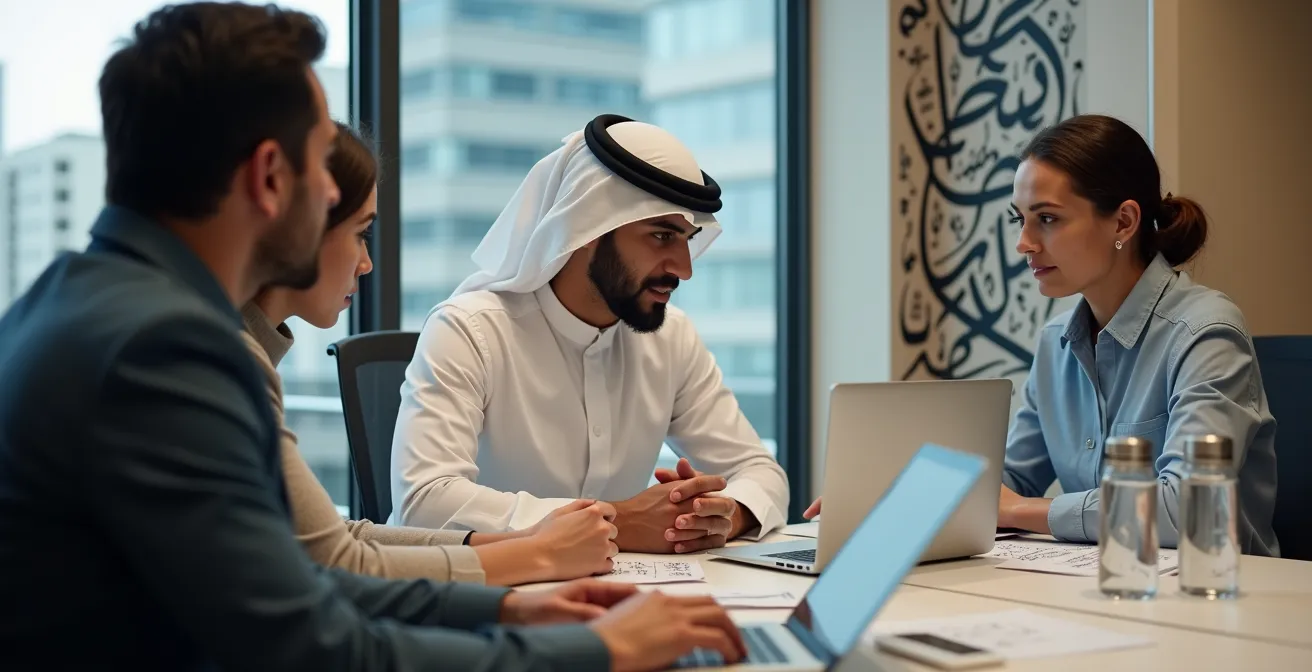
As the visual suggests, the ideal is a seamless collaboration. The operating costs and industry focus of each emirate directly influence the talent available, making the decision of where to build your core team a strategic one, not just a financial one.
| Factor | Dubai | Abu Dhabi |
|---|---|---|
| Funding Source | Private investors & VCs | Government programs (Hub71, ADIO) |
| Talent Pool | Broad, international | Sector-specific expertise |
| Operating Costs | Higher living expenses | More affordable |
| Industry Focus | Fintech, e-commerce, logistics | AI, healthcare, energy |
Ultimately, the most cost-effective strategy is the one that maximizes alignment and velocity, which often points to a strong local presence.
How to Patent Your Software Algorithm in the UAE?
For startups in deep tech, protecting intellectual property (IP) is paramount. While the UAE has robust IP laws, the strategic value of that IP is perceived differently by the two ecosystems. For Dubai’s DIFC, a patent is a defensive moat—a tool to secure market position and provide an advantage in negotiations. For Abu Dhabi’s Hub71, a strong patent portfolio is a core asset class in itself. This goes back to the “Sovereign Mindset,” where the goal is to build and own the foundational technologies of the future.
This perspective is directly influenced by the activity of the region’s Sovereign Wealth Funds (SWFs). As a prominent law firm, Ashurst, highlights in their analysis, regional SWFs are driving a new wave of IP-focused investment. This insight is crucial for founders. As Founder Connects notes in their guide, this long-term vision is reflected in the selection process:
Hub71 carefully selects startups that align with its vision for growth, ensuring a mutually beneficial partnership
– Founder Connects, Pre-Seed Accelerator Guide 2024
This “vision for growth” is inextricably linked to building a portfolio of valuable, defensible IP. The legal frameworks being built in both emirates—such as the ADGM’s specific framework for VC fund managers and DIFC’s Digital Assets Law—are designed to support and regulate these emerging technologies, making the region a sophisticated place to manage and scale an IP-heavy business.
Case Study: Sovereign Wealth Funds Driving the IP Agenda
According to an analysis by Ashurst, Abu Dhabi’s Mubadala was the most active sovereign wealth fund globally in 2024, deploying a significant portion of the record $82 billion invested by regional SWFs combined. This capital is increasingly focused on technology and IP-rich assets. Hub71 acts as a direct conduit, connecting startups to government entities and the broader Mubadala portfolio to drive this innovation agenda. When you pitch Hub71 with a strong patent strategy, you are not just talking to an accelerator; you are speaking the language of one of the world’s most powerful strategic investors.
Therefore, when pitching in the UAE, don’t just present your patent as a shield; present it as a core, appreciating asset that aligns with the long-term wealth-building strategy of the capital you seek.
What Innovation Grants Are Available for Green Tech Startups?
For Green Tech startups, Abu Dhabi is unequivocally the more fertile ground. This is a perfect illustration of the “Sovereign Mindset” in action. Sustainability and clean energy are not just market opportunities; they are core pillars of the UAE’s long-term economic diversification and global positioning strategy. Consequently, Abu Dhabi has architected a comprehensive ecosystem of grants, accelerators, and platforms to nurture this specific sector.
The support is multi-layered. At the highest level, the ADIO Innovation Program offers substantial grants for projects in strategic sectors, including clean energy. For earlier-stage ventures, specialized accelerators provide critical seed funding and support. For example, The Catalyst program provides seed funding ranging from $50,000 to $150,000, equity-free, specifically for clean tech startups. This is not just capital; it’s validation and a direct line into the Masdar and BP networks, offering mentorship and unparalleled industry access. Platforms like Abu Dhabi Sustainability Week (ADSW) further amplify this by providing a global stage for startups to connect with investors and partners.
This concentrated effort makes pitching a Green Tech startup in Abu Dhabi a very different conversation than in Dubai. You are not just selling a business; you are contributing to a national strategic imperative. Your pitch should reflect this, emphasizing not only your technology’s commercial viability but also its potential contribution to the UAE’s sustainability goals.

The level of detail and innovation in the ecosystem, as symbolized by the advanced facilities in places like Masdar City, shows the depth of commitment.
Green Tech Founder’s Funding Checklist
- ADIO Innovation Program: Does my project in AI, clean energy, or advanced manufacturing have the scale to apply for grants up to AED 10 million ($2.7 million)?
- MBRIF Loan: Is an interest-free loan of up to AED 2 million from the Mohammed Bin Rashid Innovation Fund the right type of capital for my current stage?
- Catalyst Accelerator: Is my clean tech startup ready for an intense 6-month acceleration with $50,000-150,000 in equity-free funding?
- Strategic Partnerships: Have I identified how to leverage partnerships with Masdar and BP through The Catalyst for mentorship and network access?
- Global Exposure: What is my strategy to leverage Abu Dhabi Sustainability Week (ADSW) for maximum global exposure and investor connections?
Approaching the right programs with a tailored message of strategic alignment is the key to unlocking this non-dilutive and highly valuable support.
Key Takeaways
- Mindset is Everything: Success hinges on understanding Abu Dhabi’s “Sovereign Mindset” (long-term, strategic portfolio) versus Dubai’s “Merchant Mindset” (fast, transactional ROI).
- Alignment Over Pitch: The most polished pitch deck will fail if your startup’s DNA doesn’t align with the ecosystem’s core investment philosophy. Match your sector and stage to the right hub.
- Traction Speaks Louder Than Words: Both ecosystems, especially Hub71, value evidence. Revenue, significant pilots, or a world-class team with prior exits are more persuasive than a pre-MVP idea.
How Many Visas Do You Actually Get with a Flexi-Desk Package?
Founders often get bogged down in the logistical details, and the question of visas per flexi-desk is a common one. While the specific number can vary by free zone and package, focusing on this metric misses the entire point of joining an ecosystem like Hub71. The real value isn’t the number on your visa allocation; it’s the network effect and credibility that comes with being a “Hub71 startup.”
The “Sovereign Mindset” is at play here again. Hub71 isn’t selling office space or visa packages. It is building a curated community. Being accepted into this community provides benefits that far outweigh the cost of a desk. It grants you a powerful stamp of approval that opens doors to corporate clients, government tenders, and a network of over 40 capital partners. The ecosystem has facilitated 118 corporate deals worth AED 658 million in just two years. That is the real ROI, not saving a few thousand dirhams on a visa.
Ecosystem Case Study: The True Value of a Hub71 Address
Hub71 has attracted over 260 startups from 54 nationalities. These are not just tenants; they are portfolio companies. Collectively, they have raised AED 5.4 billion ($1.5 billion) in venture capital, created over 1,100 jobs in Abu Dhabi, and generated AED 3.5 billion ($1 billion) in revenue. When you secure a place in Hub71, you’re not just getting visas; you’re plugging into an economic engine. You are gaining access to a peer group of over 320 founders and the institutional credibility that helped them achieve these results. The visa is the key; the ecosystem is the kingdom.
So, while you should certainly ensure your chosen package meets your immediate operational needs, your strategic focus should be on leveraging the ecosystem itself. The most valuable asset you receive is not the visa allocation, but the access and credibility that the Hub71 brand confers upon your venture.
The right question isn’t “how many visas do I get?” but “what can I achieve with the access this ecosystem provides?”
Why Is the UAE the Safest Haven for Foreign Capital in the Middle East Today?
The UAE’s status as a safe haven for capital is no accident; it’s the result of a deliberate, long-term strategy built on political stability, pro-business regulation, and a clear vision for the future. For founders and investors, this translates into a predictable and secure environment to build and scale a business. The country’s strategic location is amplified by world-class infrastructure and a government that actively courts innovation and investment. This stability is the bedrock upon which ecosystems like Hub71 and DIFC are built.
This environment is attracting capital at an accelerating rate. For instance, Mordor Intelligence predicts the UAE’s fintech market will grow from $3.56 billion in 2025 to $6.43 billion by 2030, a staggering 12.56% yearly growth. This isn’t speculative hype; it’s capital voting with its feet, flowing towards a regulatory environment that offers clarity and a market that promises growth. Whether it’s the ADGM’s progressive frameworks or the DIFC’s established common law system, the legal infrastructure is designed to protect assets and facilitate business.
This commitment to building a trusted, long-term ecosystem is best summarized by the leaders on the ground. Ahmad Ali Alwan, the CEO of Hub71, captured this sentiment perfectly in the 2024 Impact Report, tying the ecosystem’s success directly to this foundation of trust:
The progress captured in this report reflects the strength of our ecosystem and the trust placed in us by those who believe in Abu Dhabi’s long-term potential
– Ahmad Ali Alwan, Hub71 CEO, 2024 Impact Report
This “long-term potential” is the ultimate promise of the UAE. For a founder, this means you are not just building a startup for a quick exit; you are building a business on a foundation designed to endure and thrive for decades to come.
The next step for any founder is not to simply polish their pitch deck, but to critically analyze which of these two powerful investment DNAs—Abu Dhabi’s sovereign strategy or Dubai’s commercial velocity—their startup truly aligns with. Making the right choice is the first, and most important, investment you will ever make.