

The ultimate expression of luxury is no longer a physical object, but a biologically inimitable, inheritable asset—and a DNA-based fragrance is its highest form.
- Unlike traditional bespoke items, a DNA-derived scent is scientifically impossible to replicate, its value rooted in its unique molecular signature.
- The commission process transcends typical creative briefing; it is a scientific endeavor that translates your genetic olfactory predispositions into a liquid formula.
Recommendation: Approach the commission not as purchasing a perfume, but as investing in the creation of a piece of personal intellectual property, where the formula itself is the primary asset.
For the individual who has curated a life of distinction, the pursuit of the unique becomes the ultimate endeavor. The world of bespoke—tailored suits, hand-built automobiles, custom-commissioned jewelry—offers a high degree of personalization. These are dialogues between client and artisan, resulting in objects of profound beauty and personal significance. However, they remain interpretations, a master craftsman’s vision of your desires, replicable by another with sufficient skill. This traditional understanding of luxury, based on craftsmanship and rare materials, is reaching its apotheosis.
But what if the very concept of bespoke could be elevated? What if the blueprint for an object of ultimate luxury was not an artisan’s sketch, but your own genetic code? The conversation is shifting from perceived value to inherent value. We are moving beyond commissioning an object that tells your story to engineering an asset that *is* your story at a molecular level. This is the new frontier, particularly in a hub of innovation like Dubai, where the future of luxury is being written today. The focus is no longer on acquiring a scent but on creating a biological asset—a fragrance scientifically derived from your DNA.
This guide reframes the commissioning process. It is not about selecting notes from a perfumer’s organ. It is an exploration of how to translate your unique biological identity into a liquid form, creating an asset as singular as your fingerprint and as enduring as your legacy. We will explore this by drawing parallels with other bastions of bespoke craftsmanship, revealing why a DNA fragrance represents an entirely new category of personal asset.
To fully appreciate the paradigm shift that a DNA-based fragrance represents, this article deconstructs the process through the lens of other ultra-luxury commissions. Each section uses a familiar bespoke world as a metaphor to illuminate a different facet of creating your own molecular signature.
Summary: The New Code of Ultra-Luxury Commissions
- Ready-to-Wear vs Bespoke: Is the 300% Price Difference Worth It for Suits?
- The Briefing Error That Ruins Most Bespoke Jewelry Commissions
- Why Does a Hand-Built Supercar Take 12 Months to Deliver?
- What to Gift the Billionaire Who Has Everything: The Bespoke Experience Guide
- How to Ensure Your Custom Piece Retains Value on the Secondary Market?
- Auction House vs Private Dealer: Who Takes the Lower Commission?
- Where to Source Hand-Made Ceramics for Your Table Setting?
- How to Authenticate a Second-Hand Rolex Without a Box and Papers?
Ready-to-Wear vs Bespoke: Is the 300% Price Difference Worth It for Suits?
The difference between a ready-to-wear suit and a bespoke creation from Savile Row is not merely about fit; it’s a fundamental shift in value from mass production to individual artistry. This same logic applies, exponentially, when comparing traditional bespoke perfume to a DNA-based commission. The traditional luxury fragrance market is robust; the $23.99 billion luxury perfume market size in 2024 demonstrates a clear appreciation for premium scents. A top-tier bespoke fragrance from a historic house represents the pinnacle of this world, a personalized scent created through consultations with a master perfumer.
However, a DNA-based fragrance introduces a new, non-negotiable layer of exclusivity: biological uniqueness. It is not an artist’s interpretation of you; it is a scientific translation of your olfactory receptor genes. This changes the value proposition entirely. While a traditional bespoke scent’s value is tied to brand prestige and the perfumer’s time, a DNA fragrance’s value is derived from data, bioinformatics, and the creation of a formula that is, by its very nature, impossible for anyone else to possess. The price difference is not for a better-fitting “suit,” but for a suit woven from your own DNA.
The distinction becomes clearest when analyzing the components of cost and value. A traditional commission focuses on the physical product and the service, whereas a DNA commission’s primary deliverable is an intellectual property asset. The following comparison highlights this profound difference.
| Aspect | Traditional Bespoke | DNA-Based Fragrance |
|---|---|---|
| Base Cost | $900-$130,000 | $325-$1,500 (estimated) |
| Consultation Process | 1-3 hours with perfumer | DNA sequencing + consultation |
| Additional Elements | Brand prestige, packaging | Genetic analysis, bioinformatics, IP ownership |
| Exclusivity Level | Limited to craftsmanship | Biological impossibility to replicate |
| Asset Type | Physical product | Formula as inheritable IP |
The Briefing Error That Ruins Most Bespoke Jewelry Commissions
In high jewelry, a commission fails when the brief is incomplete. A client might describe a feeling, a memory, or a favorite gemstone, but if the artisan doesn’t understand the client’s lifestyle or aesthetic context, the final piece, however beautiful, feels foreign. The common error is a one-way flow of information. The same is true in perfumery, but the solution offered by DNA analysis is revolutionary. The most common briefing error in fragrance creation is relying solely on subjective memory and preference.
A successful DNA fragrance commission avoids this by embracing a “dual-input” process. The objective DNA data provides the ‘what’—a scientific olfactory blueprint of the scents your biology is predisposed to perceive favorably. This is the foundational, non-negotiable truth. The second input is your personal narrative, which provides the ‘why’—the emotional context, memories, and aspirations that will give the fragrance its soul. Fusing these two inputs is the key to creating a scent that is not only scientifically attuned to you but also emotionally resonant.
Case Study: Azzi Glasser’s Personality-to-Scent Translation
Renowned perfumer Azzi Glasser’s method offers a compelling analogue. She describes her bespoke process as creating ‘a bit like a DNA print.’ While not using literal genetic sequencing, her approach is deeply diagnostic. She studies a client’s personality, fashion style, and even their skin chemistry to select fragrance ingredients like a film director choosing actors. This deep-dive ensures the final creation is a true reflection of how the client wishes to project themselves, blending their inner world with their outward persona. It’s a holistic briefing that goes far beyond “I like the smell of roses.”
As master perfumer Azzi Glasser articulated in an interview with Dazed Digital, this synergy is everything.
The correct ‘brief’ is a dual-input process: the objective DNA data provides the ‘what’ (olfactory predispositions), while the client’s personal narrative and memories provide the ‘why’ (the emotional soul of the scent).
– Azzi Glasser, Dazed Digital
Why Does a Hand-Built Supercar Take 12 Months to Deliver?
The 12-to-24-month waiting list for a hand-built supercar is not a sign of inefficiency; it is a testament to the meticulous, multi-stage process of engineering and assembly. Each component, from the engine block to the hand-stitched leather, is crafted and integrated in a precise sequence. Commissioning a DNA fragrance follows a remarkably similar, albeit molecular, timeline. It is not a simple mixing of oils but a scientific and artisanal journey from data to finished product.
The process begins with the “chassis design”: the sequencing of your DNA and the bioinformatic analysis of key olfactory receptor genes. This creates the molecular signature that forms the core of the fragrance. Next is the “engine build,” where perfumers and chemists source or create the specific molecules—some rare and sourced from across the globe—that align with your genetic blueprint. This phase is followed by iterative “test drives,” where you sample initial accords and provide feedback, allowing for refinements. The final, and often longest, phase is the “curing”: a crucial period of maceration and maturation where the complex molecules harmonize, developing depth and stability. This patience ensures the final product is not a fleeting scent but an enduring, perfectly balanced composition.
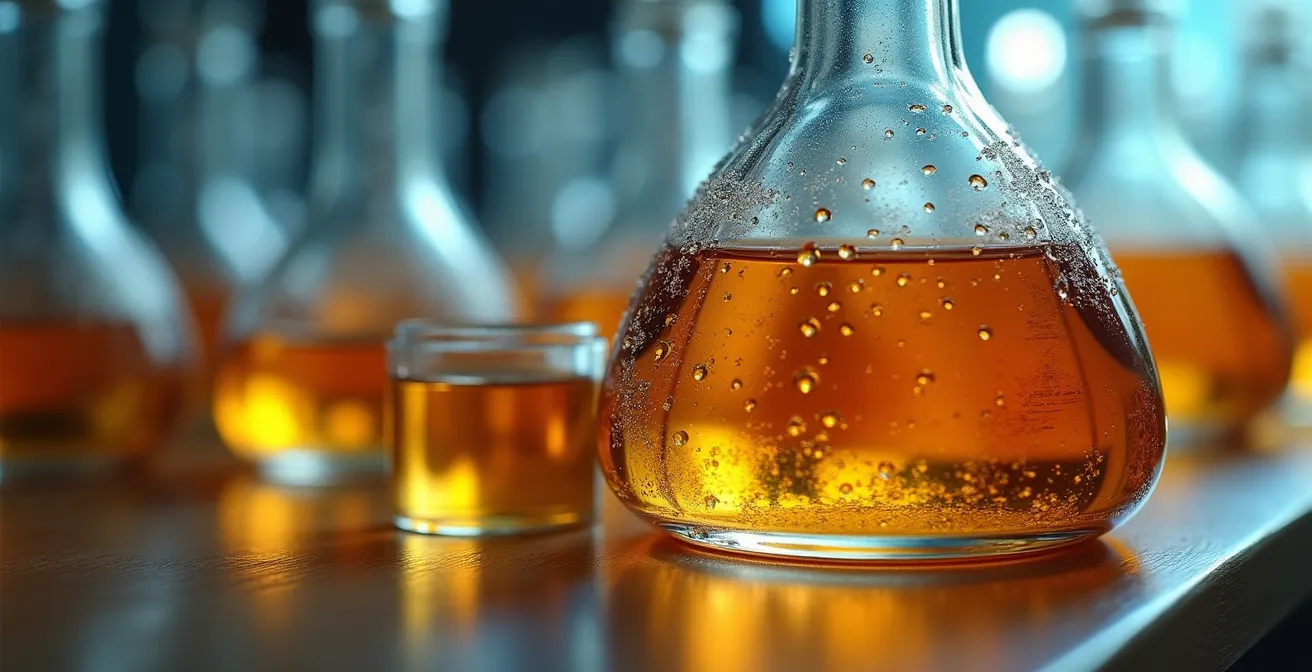
The image above captures the essence of this final stage—a controlled, patient process where science and time converge to create the final asset. Understanding this timeline is key to appreciating the depth of craftsmanship involved.
Your DNA Fragrance Creation Roadmap: A 12-Month Timeline
- Months 1-2: DNA Sequencing & Olfactory Receptor Gene Analysis. The saliva sample is sequenced to create the core genetic blueprint. This is the equivalent of the initial chassis design and engineering schematics.
- Months 3-5: Sourcing & Molecular Accord Creation. Based on the blueprint, rare and specific molecules are sourced globally, and initial scent accords are built. This is the engine block and transmission assembly.
- Months 6-9: Iterative Olfactory Trials & Client Feedback. Samples are sent to the client for feedback. The formula is refined based on this subjective input, marrying the science to personal taste. These are the test drives and performance tuning sessions.
- Months 10-12: Maceration, Maturation & Bottling. The final formula is left to age, allowing the molecular bonds to settle and the scent to harmonize completely. This is the final assembly, paint curing, and detailing.
What to Gift the Billionaire Who Has Everything: The Bespoke Experience Guide
The challenge of gifting for an individual who can acquire anything is that the value of material objects diminishes. The answer, therefore, lies not in objects but in unparalleled experiences and truly unique assets. A DNA-based fragrance is the epitome of this concept. It is not another item to be displayed; it is an experience of co-creation and self-discovery, resulting in an asset that is fundamentally, scientifically personal. This shift towards experiential and personalized luxury is a significant market trend, with one report noting that bespoke and personalized fragrances are experiencing 8.23% CAGR growth.
This gift transcends the transactional. It offers the recipient a journey into their own biology, a dialogue with science and art. More importantly, it offers them something that money, influence, or status alone cannot otherwise procure: a scent that is biologically their own. It redefines the notion of exclusivity. As Ben Krigler, a fifth-generation perfumer, astutely noted, the paradigm of luxury has shifted inward.
People [used to] buy jewelry as a show of wealth. Now, to have something that is hidden and not really viewable is actually the new luxury.
– Ben Krigler, Marie Claire
This idea of “hidden luxury” is the key. A DNA fragrance is not for public display; its value is known intimately by the owner. It is a secret shared between the individual and their own molecular identity. For the person who has everything, the gift of something that no one else can have—not because it is expensive, but because it is biologically impossible—is the only gift that holds true, ultimate value. It is a statement not of wealth, but of individuality in its purest form.
How to Ensure Your Custom Piece Retains Value on the Secondary Market?
For most bespoke items, from cars to watches, value retention is tied to brand provenance, condition, and rarity. However, a DNA-based fragrance introduces an entirely new asset class where the value is not in the physical object (the bottle of perfume) but in the intellectual property (the formula). This is the key to ensuring its value not only retains but potentially appreciates. The liquid itself is a consumable expression of the asset; the formula is the asset.
This formula, your unique molecular signature, can be documented, certified, and stored as a piece of intellectual property. It becomes an inheritable asset, a legacy that can be passed down through generations. Unlike a painting or a jewel, it cannot be physically stolen or lost in the same way; the core asset is the data file of the formula. This opens up unprecedented possibilities for asset management in the luxury space, including storage in high-security vaults or even tokenization as a non-fungible token (NFT), creating a verifiable and tradeable digital representation of your unique biological asset.
Case Study: The Formula as a Tradeable Intellectual Property Asset
Pioneering companies in this space have conceptualized DNA-based perfumes as “biologically seductive liquid treasures.” As detailed in explorations like the My DNA Fragrance project, the true innovation lies in treating the formula as a standalone asset. By creating a unique formula from a client’s DNA blueprint, the company provides not just a perfume but exclusive ownership of that formula. This intellectual property could theoretically be traded, licensed, or vaulted, establishing a new category of luxury investment where the asset is information, secured by biology.
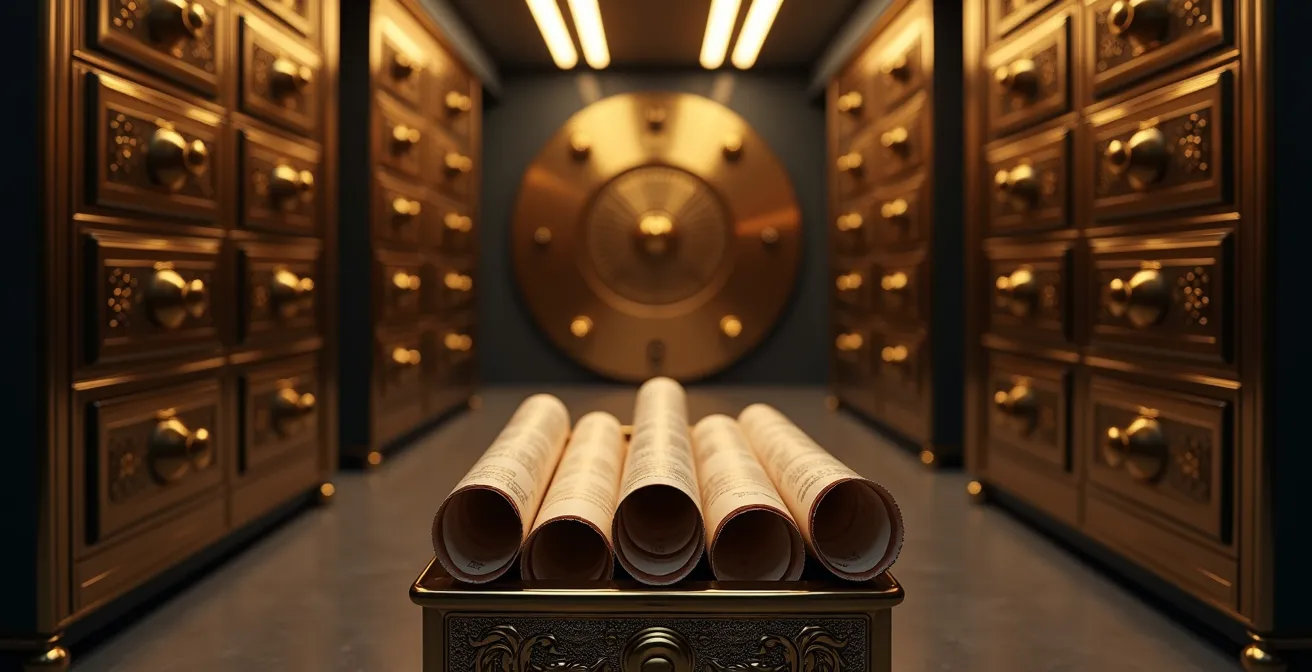
The security and authentication of this asset are therefore paramount. The vessel is not just the bottle, but the secure documentation and data file that constitute the formula’s existence as a piece of property. The visual metaphor is not a perfume shelf, but a vault.
Auction House vs Private Dealer: Who Takes the Lower Commission?
When commissioning a bespoke piece, one often faces a choice: engage a globally recognized luxury house (the “Auction House”) or collaborate with a specialized, independent artisan (the “Private Dealer”). This decision carries significant implications for cost, creative control, and the nature of the final product. In the world of perfumery, this translates to choosing between a legacy brand like Guerlain, whose bespoke services are a hallmark of established prestige, and an independent laboratory or perfumer specializing in cutting-edge techniques like DNA analysis.
The “Auction House” model, offered by major brands, provides immense brand value and a seamless, if less collaborative, experience. The price point is often stratospheric, reflecting the brand’s heritage and marketing overhead. As Marie Claire notes, Guerlain’s bespoke fragrances start at a staggering $130,000. In contrast, the “Private Dealer”—the independent perfumer or specialized lab—offers a more intimate, hands-on collaboration. Their focus is on artisanal authenticity and technical innovation rather than brand prestige. The cost is often lower, but the required investment of the client’s time and input is significantly higher.
For a DNA-based fragrance, where the process is inherently scientific and deeply personal, the “Private Dealer” model is often more aligned. It allows for greater creative freedom and a direct relationship with the creators who are translating your genetic code. The choice depends on the client’s ultimate goal: acquiring a trophy piece from a famed house or co-creating a truly personal and innovative biological asset.
| Aspect | Luxury House (Auction Model) | Independent Perfumer (Private Dealer) |
|---|---|---|
| Starting Price | $130,000+ (Guerlain) | £1,500-£6,000 ($1,900-$7,600) |
| Brand Association | High prestige value | Artisanal authenticity |
| Creative Freedom | Limited by house style | Full customization |
| Time Investment | Minimal client involvement | Intensive collaboration required |
| Innovation Level | Traditional methods | Cutting-edge techniques possible |
Where to Source Hand-Made Ceramics for Your Table Setting?
The charm of hand-made ceramics lies in their “terroir”—the unique clay, the specific glaze, the individual touch of the artisan’s hand. Sourcing the components for a DNA fragrance follows a similar philosophy, blending scientific precision with artisanal sourcing. The “raw materials” are not just generic fragrance oils but a curated selection of molecules and natural extracts chosen to resonate with your specific genetic terroir. This is where local context, such as that found in Dubai, can add another layer of distinction.
The Dubai perfume scene is a vibrant intersection of ancient tradition and modern innovation. Artisans and perfume houses in the region excel at incorporating local botanicals, such as rare desert flowers, precious oud, and rich spices, into their creations. For a DNA fragrance commissioned in Dubai, this presents a unique opportunity. The scientific blueprint can be “dressed” with notes that reflect the region’s olfactory landscape, creating a scent that is not only biologically yours but also geographically rooted. This is akin to a ceramicist using a local clay body that can be found nowhere else.
Case Study: Dubai’s Modern-Artisanal Perfume Scene
Companies like Scentiche in Dubai embody this blend of personalization and local craftsmanship. They offer services where clients can design a personalized perfume, choosing not only the scent profile but also custom bottles, caps, and packaging. This philosophy celebrates the uniqueness and “perfect imperfections” that come with bespoke creation. Their work demonstrates a deep appreciation for the region’s ‘terroir,’ skillfully integrating traditional ingredients like oud with modern client desires. This local ecosystem provides the perfect environment for sourcing the artisanal elements that will complement the scientific core of a DNA fragrance.
The goal is to find artisans who understand this balance. As one Dubai-based supplier, Scent DNA, puts it, the aim is to provide materials that “inspire your inner artisan.” The sourcing process is a treasure hunt for the perfect physical expression of your digital, genetic data.
Key takeaways
- A DNA-based fragrance is not a perfume; it is a biological asset whose primary value lies in its inheritable, non-replicable formula.
- The commissioning process is a dual-input brief, combining objective genetic data (the ‘what’) with subjective personal narrative (the ‘why’).
- The value and authenticity of the fragrance are intrinsically linked to the scientific data of the formula, making it a new class of intellectual property.
How to Authenticate a Second-Hand Rolex Without a Box and Papers?
Authenticating a high-value asset without its original documentation—a “box and papers” Rolex, for instance—requires expert analysis of its intrinsic properties. A master watchmaker must examine the movement, the materials, and the micro-engravings to verify its provenance. A DNA fragrance, by its very design, has the ultimate intrinsic authentication method built-in: its molecular composition. The “papers” for this asset are not a paper certificate but the original data file of the formula itself.
Authentication is not a matter of a connoisseur’s subjective “nose”; it is a definitive scientific test. As noted by industry experts, the composition of any fragrance can be deconstructed and identified through a process called gas chromatography-mass spectrometry (GC-MS). This technology separates a substance into its individual chemical components and provides a precise “fingerprint” of its makeup. To authenticate a DNA fragrance, a sample of the liquid would be analyzed via GC-MS, and its molecular fingerprint would be compared against the original formula data file stored by the creating laboratory or in the owner’s private vault. A match is an irrefutable proof of authenticity. A mismatch proves it is a counterfeit.
Scientific Proof: GC-MS Authentication of Luxury Perfumes
Scientific research validates this method as the gold standard. A study published on Chromatography Online detailed the use of advanced two-dimensional gas chromatography (GC×GC–TOF-MS) to analyze luxury perfumes and their imitations. The technology was able to generate comprehensive molecular fingerprints that clearly distinguished the authentic products from the counterfeits in a single, automated workflow. This establishes that the creating perfumer or lab, armed with the original formula data, acts as the ultimate authenticator, much like a master watchmaker is for a complex timepiece.
This scientific verifiability is what elevates a DNA fragrance to the status of a true asset. Its identity is not based on packaging or a certificate that can be forged, but on a molecular truth that can be scientifically proven. In a world of sophisticated counterfeits, this level of certainty is the ultimate security.
The journey of commissioning a DNA fragrance is a definitive statement in the world of ultra-luxury. It is a pivot from the acquisition of beautiful objects to the engineering of personal, biological assets. The process requires a shift in mindset, viewing the final product not as a consumable good, but as a piece of inheritable intellectual property. To begin this journey is to explore the very essence of what makes you unique and to codify it into a form that is both timeless and scientifically yours.