
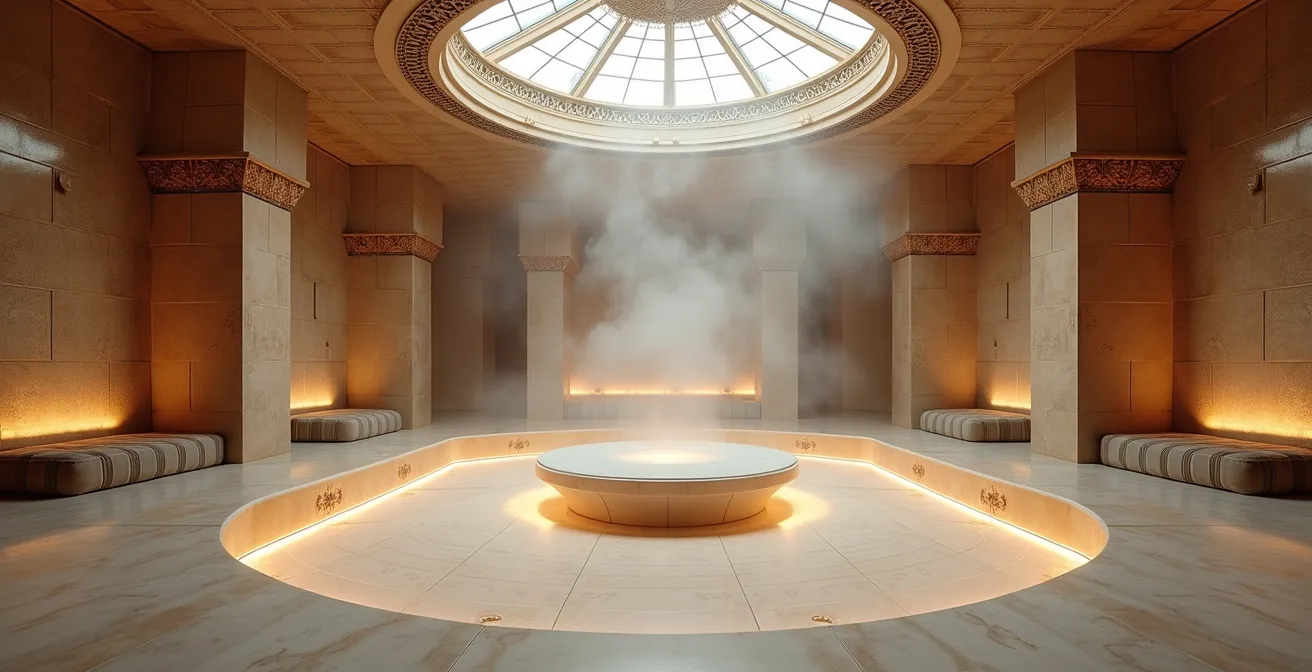
The essential difference is not about heat, but about philosophy: a hammam is a holistic, multi-step purification journey, while a steam room offers targeted, singular heat therapy.
- A traditional hammam is a complete ritual involving successive heat stages, deep exfoliation, and hydration to cleanse the body as a whole system.
- A modern steam room is an isolated experience designed for specific benefits like muscle relaxation or respiratory relief, typically used as one component of a spa visit.
Recommendation: Choose the hammam for a deep, systemic reset and radiant skin. Opt for the steam room for quick, focused relief from physical stress or congestion.
As a spa director, one of the most common points of confusion I encounter from guests is the distinction between a traditional hammam and a modern steam room. Many assume they are interchangeable—both are hot, wet spaces, after all. This perception often leads them to overlook the profound and distinct therapeutic benefits unique to each. The conversation usually circles around simple differences: one is a single room, the other a sequence of rooms; one is often solitary, the other more social. While true, these points only scratch the surface and miss the fundamental divergence in their very purpose.
The real distinction lies in their therapeutic philosophy. A modern steam room is an isolated tool for heat therapy, excellent for relaxing muscles or clearing sinuses for 15-20 minutes. It’s an efficient, targeted treatment. A traditional hammam, by contrast, is not a treatment; it is a holistic journey. It’s a meticulously choreographed ritual designed to purify the body and mind systemically through a sequence of warming, deep cleansing, exfoliation, and cooling. It’s an immersive experience rooted in centuries of culture, designed to reconnect you with your body.
To truly integrate traditional healing with modern therapy, you must look beyond the steam and understand the unique sensory architecture and purpose of each. This guide is designed to move you past the confusing terminology and empower you to choose the experience that genuinely aligns with your wellness goals, whether you seek a quick thermal escape or a profound, restorative ceremony.
In this guide, we will explore the nuances that define authentic Arabian and modern wellness practices. From unique, science-backed regional ingredients to the unwritten rules of spa etiquette, you’ll gain an insider’s perspective on how to navigate the world of luxury wellness with confidence and purpose.
Summary: What Is the Difference Between a Traditional Hammam and a Modern Steam Room?
- Why Camel Milk Treatments Are Becoming the New Anti-Aging Trend?
- Nudity and Separation: What Are the Spa Rules in the Middle East?
- Deep Tissue vs Aromatherapy: Which Combats Jet Lag Faster?
- How Often Should You Do a Moroccan Bath for Optimal Skin Health?
- When is the Best Time to Visit a Hotel Spa to Avoid Crowds?
- Psoriasis and Salt Water: How Long Should You Soak for Results?
- Is the Light Festival Suitable for Toddlers Past Bedtime?
- Why Is Seawater Concentration More Effective for Arthritis in the UAE?
Why Camel Milk Treatments Are Becoming the New Anti-Aging Trend?
The rediscovery of ancient ingredients is a cornerstone of modern wellness, and nowhere is this more evident than with the rise of camel milk. Long a staple of Bedouin culture, its potent properties are now being validated by science, positioning it as a formidable force in anti-aging skincare. Its secret lies in a unique molecular structure that sets it apart from other milk types, offering unparalleled benefits for skin rejuvenation and health.
The efficacy of camel milk is not just folklore; it is confirmed by recent research into the clinical effectiveness of camel milk in skincare. Studies published in 2024 reveal that its fat and protein molecules are significantly smaller than those in other milks, allowing for superior penetration into the skin’s layers. This ensures that its rich blend of nutrients is delivered where it’s needed most. Furthermore, camel milk is a natural source of alpha-hydroxy acids (AHAs), particularly lactic acid, which gently exfoliate the skin to promote cell turnover and reveal a brighter complexion.
Beyond simple exfoliation, camel milk is a powerhouse of protective and restorative compounds. It contains high concentrations of vitamins C, D, and E, which are essential for building skin resilience and combating oxidative stress. Its proteins, like casein and lactoferrin, have even shown anticarcinogenic properties, making it a promising ingredient in cosmeceuticals for preventing skin damage and addressing conditions like acne and seborrheic dermatitis. This blend of gentle exfoliation, deep nourishment, and powerful cellular protection is why camel milk is no longer just a traditional remedy but a leading-edge anti-aging treatment.
Nudity and Separation: What Are the Spa Rules in the Middle East?
Navigating the cultural etiquette of spas in the Middle East is a primary concern for many international travelers. The rules surrounding nudity and gender separation can vary dramatically, moving from the strict traditions of a public hammam to the hybrid models of luxury hotel spas. Understanding these nuances is key to a comfortable and respectful experience. The core principle is always modesty and a clear separation of spaces for men and women, though its modern application has evolved.
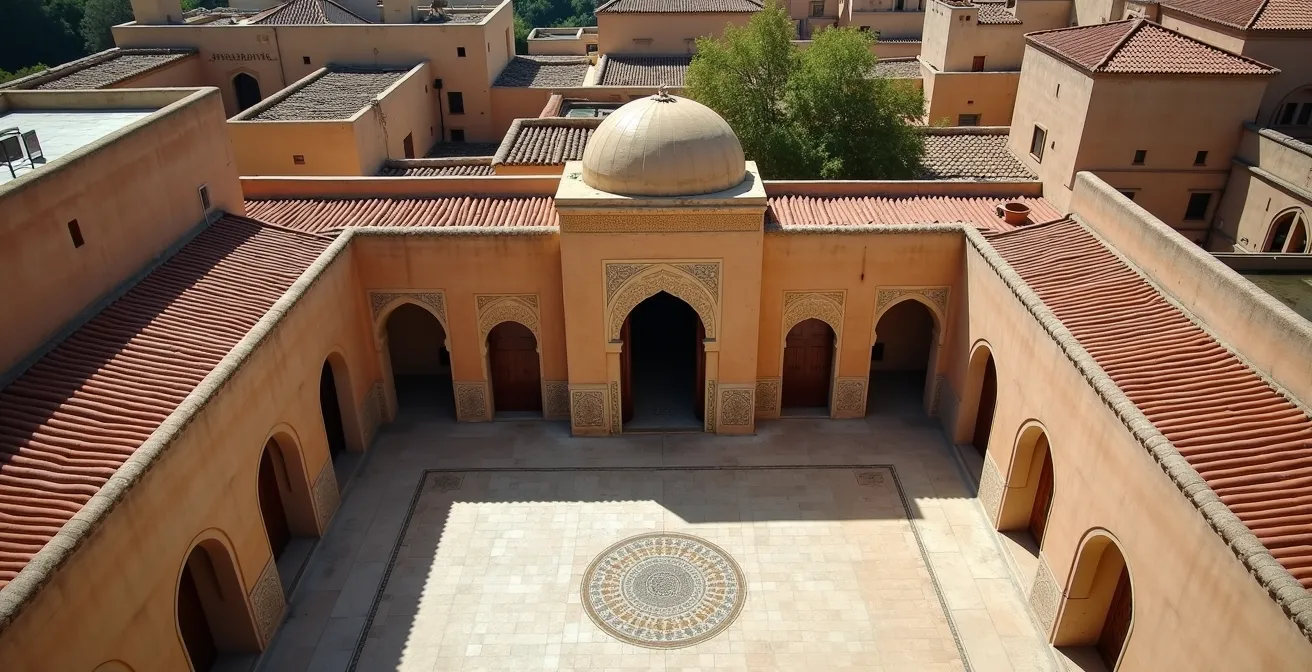
As the image above illustrates, traditional hammam architecture itself is built on the principle of separation. In these authentic public baths, you will find a strict division, often with designated days or separate wings for men and women. Within these single-gender spaces, full nudity is generally the norm and accepted as part of the purification ritual. However, in the context of a five-star hotel in a city like Dubai, the rules adapt to international expectations while respecting local laws. Here, you’ll typically find that same-gender therapists are required by law, especially for massages. In Saudi Arabia, the landscape is also evolving; while many hotel spas historically catered only to men, there is a growing number of high-end facilities with luxurious, dedicated women’s sections or fully-equipped ladies-only spas.
To navigate this with ease, here are the key variations you might encounter:
- Traditional Public Hammams: Expect strict gender separation and be prepared for nudity within same-gender areas.
- Dubai Luxury Hotel Spas: Same-gender massage is the standard practice. Some high-end properties offer private hammam suites for couples, providing a way to share the experience while respecting cultural norms.
- Modern Hybrid Spaces: Many facilities provide disposable underwear, which is the most common and recommended option. In mixed-gender wet areas (like pools), standard swimwear is required.
- Authentic Attire: In a traditional hammam, you will often be given a pestemal, a classic woven cotton wrap, to wear between treatments.
Your Spa Etiquette Checklist: Middle East Edition
- Clarify Policies: When booking, ask specifically about gender separation policies, therapist gender, and what is provided (e.g., disposable underwear, robes).
- Observe and Adapt: Upon arrival, take cues from staff and other guests regarding dress code and noise levels in different zones.
- Respect Boundaries: Always assume same-gender therapists unless explicitly offered an alternative for a specific treatment like a couple’s massage.
- Embrace the Attire: Use the provided disposable underwear or pestemal. It’s designed for hygiene and to respect the environment you are in.
- Communicate Comfort: If you are ever unsure or uncomfortable, discreetly speak with a spa attendant. Your comfort is their priority.
Deep Tissue vs Aromatherapy: Which Combats Jet Lag Faster?
For the weary international traveler, the spa is often the first stop in the battle against jet lag. The most common question I hear is, “What is the fastest way to feel normal again?” Many guests are torn between a deep tissue massage to work out travel-induced knots and an aromatherapy session to calm their overstimulated mind. While both are effective for specific symptoms, neither addresses the full spectrum of jet lag’s effects. The fastest recovery often comes from an unexpected place: the traditional hammam, which offers a holistic system reset.
To understand why, it’s helpful to compare how each treatment targets the primary symptoms of jet lag, as detailed in this comparative analysis of jet lag therapies.
| Treatment Type | Primary Action | Jet Lag Symptoms Addressed | Recovery Timeline |
|---|---|---|---|
| Deep Tissue Massage | Targets muscle tension from prolonged sitting | Physical aches, stiffness | Immediate relief, 24-48 hours full recovery |
| Aromatherapy | Regulates circadian rhythms through essential oils | Sleep disruption, mental fog | Progressive over 2-3 days |
| Traditional Hammam | The steam bath provides relaxation that steam brings to body and mind | Dehydration, circulation, muscle tension, mental fatigue | Comprehensive relief within 3-4 hours |
| Integrated Protocol | Sequential treatment approach | All symptoms systematically | Optimal recovery in 48-72 hours |
As the table shows, deep tissue provides immediate physical relief, while aromatherapy works progressively on the neurological aspects of sleep. The hammam, however, tackles multiple issues simultaneously. The enveloping heat and steam combat dehydration and improve circulation, the vigorous exfoliation eases muscle tension, and the entire sensory ritual works to calm a fatigued mind. It’s a comprehensive approach that resets the body’s systems in a single, efficient session.
As Dr. Hassan Elhais, a respected spa therapy expert in the UAE wellness industry, explains:
The hammam is designed to rebalance the entire body as a system, combining heat therapy, exfoliation, and hydration in a single holistic treatment.
– Dr. Hassan Elhais, Spa therapy expert, UAE wellness industry
This systemic rebalancing is what makes the hammam exceptionally effective for jet lag. It doesn’t just treat one symptom; it addresses the root causes of imbalance, making it the most efficient path to feeling refreshed and grounded in a new time zone.
How Often Should You Do a Moroccan Bath for Optimal Skin Health?
The Moroccan bath, or hammam, is renowned for its ability to deliver an unparalleled deep cleanse, leaving skin soft and radiant. However, a common question from converts is, “How often should I do it?” The answer isn’t one-size-fits-all; the optimal frequency depends entirely on your skin type and specific wellness goals. Overtreating can be just as detrimental as not treating at all, so finding the right rhythm is crucial for long-term skin health.
The guiding principle is to work with your body’s natural processes. For general maintenance and deep exfoliation, a hammam session every 3 to 4 weeks is ideal. This timing aligns perfectly with the skin’s natural 28-day cell turnover cycle. The gommage (exfoliation) with the kessa mitt effectively removes the layer of dead cells that has accumulated, revealing the fresh, new skin beneath without disrupting the cycle. This regular reset helps maintain skin clarity, improves the absorption of moisturisers, and prevents clogged pores.
However, this frequency should be adjusted based on specific needs and environmental factors. Your ideal hammam schedule might look like this:
- For Deep Exfoliation & Renewal: Once every 3-4 weeks to align with your skin’s natural cell turnover cycle.
- For Managing Rough Skin (e.g., Keratosis Pilaris): Bi-weekly sessions can help, but ensure the kessa mitt is applied gently to avoid inflammation.
- As a Pre-Event Glow Treatment: 2-3 days before a special occasion will give your skin time to settle, leaving you with maximum radiance.
- For Winter Skin Maintenance: You might be tempted to go more often, but it’s best to go once a week maximum. Over-exfoliation can strip the skin’s protective barrier, making it more sensitive and prone to dryness in harsh weather.
- For Summer Skin Maintenance: Every 4-6 weeks is often sufficient, as higher humidity and natural oils reduce the need for intensive exfoliation.
A crucial final note: always listen to your skin. After a hammam, your skin is fresh and sensitive. It’s essential to wait at least 48-72 hours before using any other chemical exfoliants like AHAs or BHAs to prevent irritation and protect your newly revealed complexion.
When is the Best Time to Visit a Hotel Spa to Avoid Crowds?
For many, a spa visit is a sanctuary for peace and quiet. The experience can be diminished, however, if you find yourself navigating crowded changing rooms or waiting for a spot in the steam room. As a spa director, I can share an insider’s secret: the time of day you book your treatment can completely transform your experience. While afternoons and evenings are peak times, the true connoisseur of tranquility knows that the early morning holds the key to a serene and private spa journey.
This isn’t just an anecdotal observation; it’s backed by data. Research on spa utilization patterns consistently shows that the window between 8 AM and 10 AM is the quietest. In fact, studies show 40% lower occupancy in morning hammam sessions than in evening slots. Most hotel guests are either still at breakfast or out for morning activities, leaving the spa facilities wonderfully empty. This “golden hour” allows you to enjoy the pools, saunas, and relaxation lounges as if they were your own private retreat.
Visiting during this time also aligns with your body’s natural rhythms. An early morning treatment can help set a calm and centered tone for the rest of your day, rather than being a hurried activity squeezed in before dinner. You’ll find the therapists are often fresher and more focused, and the atmosphere is imbued with a sense of meditative calm as the spa awakens. So, next time you plan a spa day, resist the temptation of a post-lunch treatment and book a morning session instead. The blissful solitude you’ll find is the ultimate luxury.
Psoriasis and Salt Water: How Long Should You Soak for Results?
For those living with psoriasis, finding effective and natural relief is a constant quest. Thalassotherapy, or seawater treatment, has long been praised for its skin-soothing properties, with Dead Sea salt being particularly renowned. However, achieving tangible results depends heavily on a crucial factor: the duration and consistency of the soak. Simply taking a quick dip is not enough; a structured protocol is necessary to allow the unique minerals to work their therapeutic magic on psoriatic inflammation.
Clinical evidence provides clear guidelines. Studies show that a consistent, dedicated soaking routine is paramount. For at-home treatments, bathing affected areas in a 5% Dead Sea salt solution for 15-20 minutes daily can yield significant improvements. One study highlighted that this regimen, followed for six weeks, resulted in improved skin hydration and a visible reduction in roughness and redness. For more severe cases, clinical trials have shown that an intensive protocol can lead to an 88% reduction in PASI scores (a measure of psoriasis severity).
Case Study: Dead Sea Climatotherapy
A 2024 follow-up study on climatotherapy at the Dead Sea demonstrated the power of an immersive protocol. Patients underwent supervised treatments that combined daily baths directly in the Dead Sea for about one hour, six days a week, for a full 28 days. The sea’s extreme salt concentration (around 30%) creates a powerful osmotic gradient that helps draw inflammatory fluids from the skin tissues. The study confirmed that this intensive, month-long protocol resulted in significant and lasting symptom improvement for the 40 participants, highlighting that both mineral content and prolonged, consistent exposure are key to success.
The takeaway is clear: whether at home with a prepared salt solution or through clinical therapy, consistency is non-negotiable. A short, sporadic soak will offer fleeting comfort, but a disciplined daily routine of at least 15 minutes over several weeks is required to achieve meaningful and lasting dermatological results.
Is the Light Festival Suitable for Toddlers Past Bedtime?
While my expertise lies in the curated environments of wellness and spas, the well-being of the entire family, including its youngest members, is a holistic concern. The question of taking a toddler to a light festival past their bedtime is a common dilemma for parents wanting to share magical experiences without disrupting crucial sleep schedules. There is no single right answer, as it depends heavily on the child’s temperament, the nature of the event, and the parents’ strategy.
Generally, for toddlers, routine is paramount for healthy development. Significantly disrupting their bedtime can lead to overstimulation and difficulty settling for the next few days. A light festival is a highly stimulating environment with crowds, loud sounds, and intense visual effects. For a sensitive or younger toddler, this can be overwhelming rather than enjoyable, especially when they are already tired.
However, if you decide to go, a few strategies can mitigate the disruption. Consider attending on a weekday when crowds are smaller, or go as early as possible to leave before your child becomes overtired. A well-fed toddler who has had a good nap earlier in the day will cope better. Ultimately, you know your child best. If they are adaptable and you are prepared for a potential day or two of sleep schedule readjustment, it can be a memorable family outing. If your child thrives on routine, it might be an experience best saved for when they are a little older.
Key Takeaways
- Philosophy Over Features: Choose a hammam for a systemic, ritualistic cleanse and a steam room for quick, targeted heat therapy.
- Etiquette is Key: In the Middle East, always assume gender separation and same-gender therapists. When in doubt, ask and observe.
- Time Your Visit: The best time for a quiet spa experience is early morning (8-10 AM), when facilities are up to 40% less crowded.
- Consistency for Results: Therapeutic treatments like hammams or salt soaks deliver optimal results when performed on a consistent schedule aligned with your goals.
Why Is Seawater Concentration More Effective for Arthritis in the UAE?
The healing power of the sea, or thalassotherapy, is a practice as old as time. Yet, its effectiveness is not uniform across the globe. In regions like the UAE, the unique properties of the local seawater, particularly the Arabian Gulf’s high salinity, create a uniquely potent environment for treating conditions like arthritis. This is not simply about bathing in salt water; it’s about leveraging a specific and powerful biomechanical and mineral-rich environment.
The primary reason for this enhanced effectiveness is the high mineral concentration. Similar to the famed Dead Sea, the Arabian Gulf features elevated levels of magnesium, potassium, and calcium bromide. This high-salinity water creates a strong osmotic gradient when the body is immersed in it. In simple terms, this gradient helps to draw out excess inflammatory fluids from tissues, including swollen and painful joints affected by arthritis. This process, known as osmosis, provides natural and effective relief from stiffness and pain.
Modern thalassotherapy centers in the UAE amplify this natural benefit by integrating it with supervised hydro-therapy. Studies have shown that performing gentle, range-of-motion exercises in this warm, buoyant, mineral-rich water is significantly more effective than static immersion alone. The water’s buoyancy reduces weight and stress on the joints, allowing for greater mobility and less pain during movement. As confirmed in studies on thalassotherapy, this combination of active movement and mineral-rich water can increase effectiveness by 40% compared to either treatment alone. This synergy between a unique natural resource and modern therapeutic knowledge is why the region is becoming a premier destination for those seeking relief from arthritic conditions.
By understanding the distinct philosophies and therapeutic applications behind each treatment—from a systemic hammam journey to a targeted thalassotherapy session—you empower yourself to become an active participant in your own well-being. The ultimate luxury is not just access to a spa, but the knowledge to curate your own perfect wellness experience.