

Maximizing your Dubai VAT refund is less about airport queues and more about strategic financial decisions made from the moment you start shopping.
- Hidden costs like dynamic currency conversion can erode up to 8% of your refund.
- Pre-airport validation and combining DSF deals with bank offers yield significantly higher net savings.
Recommendation: Treat the VAT refund process not as a chore, but as a final discount to be actively optimized at every step.
The allure of tax-free luxury shopping in Dubai is a powerful draw for international visitors. The promise of claiming back the Value Added Tax (VAT) on a high-end watch or designer handbag seems straightforward. Most guides focus on the airport process: find a Planet Payment kiosk, scan your receipts, and collect your refund. However, this simplistic view overlooks a crucial reality. The difference between a standard refund and a maximized refund lies in the details that most shoppers miss—details that can quietly siphon away a significant portion of your savings.
The common advice to “keep your receipts” is necessary but insufficient. True financial optimization begins much earlier. It involves understanding the retail landscape, recognizing marketing ploys disguised as discounts, and being aware of procedural traps like Dynamic Currency Conversion (DCC) that are designed to profit from convenience. The process isn’t just an administrative task at the end of your trip; it’s the final, critical phase of your purchase negotiation.
This guide changes the perspective. Instead of viewing the VAT refund as a passive rebate, we will treat it as an active financial strategy. The focus is not merely on *getting* the refund, but on protecting its total value from erosion. We will dissect the process from pre-purchase planning to the final transaction at the refund counter, exposing the hidden costs and strategic opportunities that determine your true net savings. We’ll analyze where to shop, how to spot a genuine deal during the Dubai Shopping Festival (DSF), and why the most convenient options are often the most expensive.
By following this process-oriented approach, you will move from being a simple tourist to a savvy retail strategist. You will learn to navigate the system to your advantage, ensuring that the price you pay is truly the lowest possible and that the full potential of your VAT refund ends up in your bank account, not lost to intermediary fees and unfavorable exchange rates.
This article provides a detailed roadmap for navigating Dubai’s complex but rewarding retail environment. We will explore everything from choosing the right shopping destination to understanding the fine print on warranties and raffles, empowering you to make the most informed decisions.
Summary: A Strategic Guide to Maximizing Your Dubai VAT Refund
- Dubai Mall vs Outlet Village: Where to Find the Best Deals on Designer Brands?
- The Receipt Mistake That Can Cost You Double at Customs Back Home
- When Does the Dubai Shopping Festival Offer Real Discounts vs Marketing Hype?
- Why Buying Electronics Tax-Free Might Void Your Warranty in Europe?
- How to Skip the Queue at Planet Payment Kiosks in Terminal 3?
- Electronics vs Fashion: Where Are the Real Discounts During DSF?
- Why Your “All-Inclusive” VIP Safari Might Cost Double at Checkout?
- How to Win the Infiniti Mega Raffle: Are the Odds Worth the Ticket Price?
Dubai Mall vs Outlet Village: Where to Find the Best Deals on Designer Brands?
The first strategic decision in maximizing your savings is choosing where to shop. Dubai presents two primary luxury shopping environments: the full-price glamour of The Dubai Mall and the discounted promise of The Outlet Village. While both allow for VAT refunds, their value propositions are fundamentally different. Your choice should be dictated by your goal: securing a specific, current-season item or hunting for the highest possible discount on off-season goods. The Dubai Mall offers the latest collections and exclusive pieces, making it the go-to for in-demand luxury watches or handbags. Here, the saving is calculated and precise: the retail price minus your net VAT refund. For tourists, this means tourists receive approximately 4.2% back on purchases after administrative fees are deducted from the 5% VAT.
The Outlet Village, by contrast, offers steeper upfront discounts of 30-70% on previous-season stock or items specifically manufactured for outlets. However, VAT refund eligibility can be more selective, with not all stores participating in the scheme. The key is to understand the trade-off: a smaller, guaranteed saving on a new item at The Dubai Mall versus a potentially larger, but less predictable, saving on an older item at The Outlet Village. Furthermore, bank partnership offers and promotions are typically more prevalent and generous in The Dubai Mall, adding another layer to the value calculation.

This side-by-side comparison highlights the different shopping dynamics. A strategic shopper might visit The Outlet Village first to scout for unexpected deals on timeless pieces, then proceed to The Dubai Mall to purchase specific, current-season items that were not available at a discount. This two-pronged approach ensures all bases are covered. The following table provides a clear breakdown of the key differences to inform your decision.
| Factor | Dubai Mall | Outlet Village |
|---|---|---|
| VAT Refund Eligibility | Yes – Most stores participate | Yes – Selected stores |
| Product Type | Current season & exclusive collections | Previous seasons & made-for-outlet items |
| Price Range | Full retail with VAT refund | 30-70% off retail prices |
| Accessibility | Metro accessible, central location | 30-45 min drive from city center |
| Bank Partnership Offers | Multiple bank promotions available | Limited bank partnerships |
Ultimately, the “best deal” is not a universal answer but a personal one, depending on your priorities for product novelty, brand, and absolute price.
The Receipt Mistake That Can Cost You Double at Customs Back Home
One of the most significant and easily avoidable errors in the VAT refund process occurs at the point of payment, either in-store or at the refund kiosk. This mistake is known as Dynamic Currency Conversion (DCC). It is often presented as a helpful service, offering to process the transaction or refund in your home currency. However, this “convenience” comes at a steep, often undisclosed, price. When you accept DCC, you are allowing the vendor or payment processor—not your own bank—to set the exchange rate. This rate is almost always less favorable than the one your bank or credit card company would provide, and it includes a significant markup.
This hidden cost directly erodes your net refund. You might see the promised 85% of VAT calculated, but the final amount that hits your bank account can be 5-8% lower simply due to the poor exchange rate applied through DCC. The correct procedure is to always insist on being charged or refunded in the local currency, which is Arab Emirates Dirhams (AED). By doing so, you ensure that the currency conversion is handled by your own financial institution, which typically offers much more competitive Visa or Mastercard rates.
This principle is especially critical when dealing with large purchases like luxury watches. A small percentage difference on a high-value item translates into a substantial loss. The decision is often presented on a payment terminal with a single tap, making it easy to make a costly error when rushed. Always be vigilant and select AED.
Case Study: The Impact of Dynamic Currency Conversion
The financial impact of this choice is not theoretical. As a clear example of the cost, consider this scenario: a traveler purchasing a luxury watch for AED 50,000 stands to receive a VAT refund of approximately AED 2,125 (4.25%). According to a CNBC analysis on VAT refund pitfalls, by accepting dynamic currency conversion at the refund kiosk, that traveler could lose up to AED 400, or nearly 19% of their expected refund amount. This loss is purely from an unfavorable exchange rate, a penalty for choosing a seemingly convenient option. Opting for the refund in AED and allowing their home bank to manage the conversion would have preserved the full value.
This simple choice—selecting AED over your home currency—is one of the most powerful actions you can take to protect the value of your tax refund.
When Does the Dubai Shopping Festival Offer Real Discounts vs Marketing Hype?
The Dubai Shopping Festival (DSF) is a city-wide retail extravaganza famous for its promises of massive discounts and extravagant prizes. Official promotions boast that during DSF 2024-2025, over 1500 brands offer discounts ranging from 25% to 95%. While these figures are enticing, a strategic shopper must learn to distinguish between genuine value and pure marketing hype. Not all discounts are created equal, and the biggest advertised percentages often apply to the least desirable merchandise. The key is to approach DSF with a clear strategy rather than being swayed by sale signs.
True value during DSF is found by combining several factors. First, target the right categories. While fashion sees widespread markdowns, the most significant absolute savings are often in high-value electronics and luxury goods, where even a smaller percentage discount translates to substantial cash savings. Second, timing is critical. Visiting stores on weekdays early in the festival gives you access to the best selection with fewer crowds. Finally, the most effective strategy is discount stacking: combining a DSF sale price with an existing bank partner offer (often an additional 10-20% off) and the final VAT refund. This three-layer approach is where the real, substantial savings are realized.
A proactive approach is non-negotiable. Experienced shoppers begin tracking prices of desired items weeks before DSF begins. By taking photos of price tags or using tracking apps, they can verify if a “sale” price is a genuine reduction or simply a return to a previous price point. This diligence separates the casual bargain hunter from the strategic buyer who consistently secures the best deals.
Action Plan: Smart Shopping Strategies During DSF
- Price Intelligence: Track prices of target items 2-3 weeks before DSF starts using photos or price tracking apps to verify genuine discounts.
- Timing and Access: Visit stores during weekdays (Sunday-Tuesday) to avoid overwhelming crowds and receive more attentive service.
- Discount Stacking: Systematically combine DSF sale prices with bank partner offers (check your card’s promotions) for an additional 10-20% savings.
- Category Targeting: Focus on electronics and luxury goods where the absolute cash savings from a discount often exceed those from high-percentage fashion sales.
- Sale Verification: Look for “full sale” versus “part sale” indicators at boutiques; “part sale” often means only a limited selection of less desirable items are discounted.
By employing these tactics, you transform DSF from a chaotic shopping spree into a calculated exercise in value extraction.
Why Buying Electronics Tax-Free Might Void Your Warranty in Europe?
The allure of a tax-free deal on the latest smartphone or laptop in Dubai is powerful, but it comes with a significant caveat that can nullify the savings: warranty invalidity. Many electronics sold in the UAE are intended for the GCC (Gulf Cooperation Council) market. While they may come with an “international warranty,” this term is often misleading. A true “global warranty” is backed by the manufacturer worldwide, whereas a dealer-specific “international warranty” may only be honored in a handful of service centers, none of which might be in your home country. This distinction is critical.
Purchasing a device in Dubai could mean you are left without any manufacturer support if a fault develops once you return to Europe or North America. The cost of a single out-of-pocket repair on a premium device would instantly wipe out any savings from the VAT refund. Furthermore, you may encounter other “grey market” risks, such as incompatible power supplies, region-locked software or streaming services, and unsupported cellular bands that limit connectivity at home. It’s essential to verify the exact type of warranty before purchase and confirm its validity in your specific country of residence.
For high-value electronics, a more reliable safety net can be the purchase protection offered by premium credit cards. These policies often provide more comprehensive coverage than regional warranties, sometimes including accidental damage and offering a much smoother claim process. Before making a big-ticket electronics purchase, you should review your credit card’s terms to see if it offers superior protection to the manufacturer’s limited regional warranty.
Many luxury brands will only put a small, undesirable selection on sale (‘part sale’). Teach readers how to identify which brands are offering store-wide discounts
– Dubai Retail Expert, Dubai Shopping Festival Analysis 2024
In summary, the VAT-free price on electronics is only a good deal if the warranty is globally enforceable or if you have a robust alternative protection plan.
How to Skip the Queue at Planet Payment Kiosks in Terminal 3?
The final hurdle for most tourists is the airport VAT refund process, which can involve long, stressful queues at the Planet Payment kiosks, especially during peak departure times at Dubai International Airport (DXB). However, waiting until the last minute is a rookie mistake. The most effective strategy to “skip the queue” is to complete the process long before you even arrive at the airport. This requires a proactive approach and leveraging in-city refund facilities.
Several methods allow you to bypass the main airport rush. The most powerful is using the Planet mobile app. This allows you to pre-scan your receipts and create a digital wallet of your purchases. App users often have access to a separate, much faster queue at the airport kiosks, as the bulk of the data entry is already complete. Registering on the Planet Shopper Portal online also provides a paperless way to track your refunds and can expedite the process.
For those who prefer to have everything settled, certain locations offer pre-airport validation. The key is to shift the entire validation task away from the high-pressure airport environment to a calmer, more controlled setting days before your flight. This completely removes the risk of missing your flight due to long refund lines.
Case Study: The Downtown VAT Refund Alternative
A prime example of pre-airport processing is available at major shopping hubs like The Dubai Mall. According to an analysis by specialist firm Sterlinx Global, tourists can utilize in-mall VAT refund validation points. These counters allow you to complete the entire refund process, including presenting your purchased goods for inspection, up to two days before your flight. The refund is processed to your credit card after you depart the country. While this method requires a temporary hold on your credit card as a security measure, it offers the immense benefit of completely eliminating airport queues and stress. The process at the downtown location occurs during mall hours with minimal wait times, a stark contrast to the potential chaos at the airport.
This strategic shift from last-minute airport processing to proactive, in-city validation is the hallmark of a truly savvy shopper.
Electronics vs Fashion: Where Are the Real Discounts During DSF?
During the Dubai Shopping Festival, the retail landscape is flooded with discount signs, but the term “discount” can mean very different things across product categories. While promotions may advertise DSF 2024 provides exclusive shopping deals with discounts of up to 75% on both electronics and fashion, the “real” value for the consumer varies dramatically. A strategic shopper must look beyond the percentage and analyze the absolute savings and long-term value of the purchase.
Fashion items, particularly from fast-fashion brands, often see the highest percentage markdowns (50-70%). However, the absolute cash saving on a lower-priced item may be minimal. Conversely, a 15% discount on a high-end gaming laptop or smartphone can translate to a much larger absolute saving. The real metric to watch is the final price in AED. Furthermore, the resale value of these items differs significantly. Classic designer fashion pieces can retain 70-80% of their value, making a 50% discount an incredible investment. In contrast, electronics depreciate much faster, though the initial saving can be substantial.
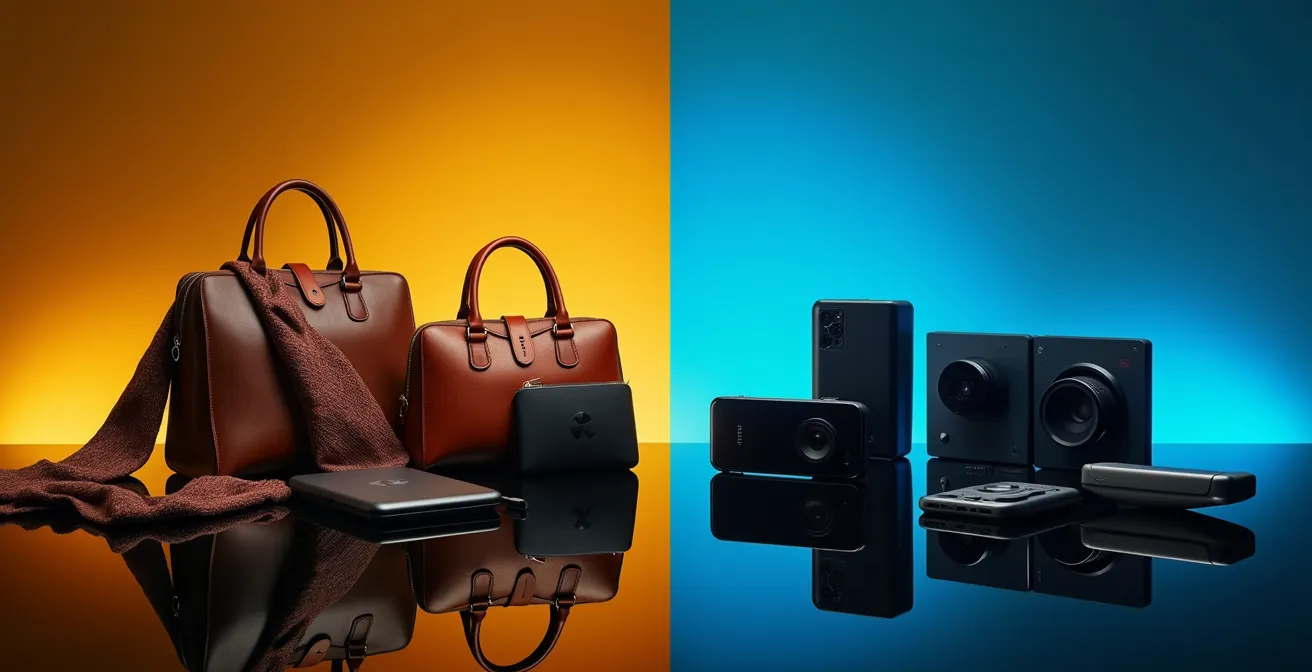
The decision depends on your objective. If the goal is to maximize immediate cash savings on a necessary purchase, electronics often provide a larger absolute discount. If the goal is long-term value and potential for resale, a deeply discounted luxury fashion item may be the smarter financial move. The following table breaks down the typical value proposition for each category during DSF, helping you decide where to focus your attention and budget.
| Category | Typical DSF Discount | Example Savings (AED) | Resale Value After 1 Year |
|---|---|---|---|
| Electronics (Smartphones) | 15-35% | 500-1,500 on AED 5,000 item | 40-50% of purchase price |
| Gaming Laptops | Up to 15% | 750 on AED 5,000 item | 50-60% of purchase price |
| Fashion (Designer Bags) | 50-70% | 2,500-3,500 on AED 5,000 item | 70-80% for classic pieces |
| Home Appliances | Up to 35% | 1,750 on AED 5,000 item | 30-40% of purchase price |
Therefore, the “real discount” is not just the percentage on the tag, but a calculation of absolute savings, category-specific depreciation, and your personal use case.
Why Your ‘All-Inclusive’ VIP Safari Might Cost Double at Checkout?
The term “VIP” in Dubai’s tourism landscape can be misleading, especially when it comes to desert safari packages. Many visitors are lured by the promise of an “all-inclusive” VIP experience, only to find their final bill has ballooned with numerous extra charges. The core issue is a lack of standardization in what “VIP” or “all-inclusive” actually means. A budget operator’s VIP package may only include priority boarding and slightly better seating, while nearly all desirable activities are charged as add-ons.
These hidden extras are where costs accumulate rapidly. The included camel ride might be a brief two-minute circle, with the “extended” desert trek costing extra. You can view the falcon for free, but a professional photo with it comes at a price. Premium quad biking, better quality shisha, and even certain beverages are often excluded from the base VIP price. These small upcharges, when combined, can easily double the initial cost of the tour, turning a perceived bargain into an expensive outing.
To avoid this, a strategic approach is required. First, demand a detailed, written list of inclusions and exclusions before booking. Clarify the duration and scope of activities like camel rides. Second, understand the operator’s tier. A premium operator might have a higher upfront cost, but it often includes more activities and higher quality service, resulting in a lower final bill and a better experience. The table below illustrates the typical differences between operator tiers and the hidden costs to watch for.
| Tour Operator Type | VIP Package Includes | Hidden Extras | Typical Additional Cost |
|---|---|---|---|
| Premium Operator | Private 4×4, dedicated guide, premium camp | Photo packages, alcohol | AED 200-500 |
| Standard Operator | Shared luxury vehicle, reserved seating | Quad biking, extended camel ride, falcon photos | AED 500-800 |
| Budget ‘VIP’ | Priority boarding, better seats at shows | Most activities, beverages, transfers | AED 800-1200 |
The key takeaway is to invest time in research and choose an operator based on transparent, comprehensive inclusions rather than a low, enticing headline price.
Key Takeaways
- Net Refund Maximization: The goal isn’t just getting a VAT refund, but maximizing its net value by avoiding hidden fees like Dynamic Currency Conversion.
- Strategic Shopping: True savings come from combining discounts (DSF, bank offers) and choosing the right retail environment (mall vs. outlet) for your specific goal.
- Pre-Airport Validation: The most effective way to avoid airport stress is to use in-city refund points or mobile apps to complete the VAT process days before your flight.
How to Win the Infiniti Mega Raffle: Are the Odds Worth the Ticket Price?
The Dubai Shopping Festival’s raffles, particularly the Infiniti Mega Raffle, are a major attraction, promising life-changing prizes of luxury cars and cash. While the dream of winning is powerful, a strategic financial assessment reveals a more complex reality. The ticket price may seem small compared to the prize, but the “win” is not the end of the financial story. Winners, especially international ones, face a host of significant, often unexpected, post-win costs that can diminish the prize’s value.
The most substantial of these are import duties and taxes in the winner’s home country. These can range from 50% to over 100% of the vehicle’s value, instantly creating a massive tax liability. Additionally, there are shipping costs to transport the car, which can be thousands of dollars, and modification expenses to ensure the vehicle complies with local safety and emission standards. These combined costs can sometimes approach the value of the car itself, forcing many winners to opt for the cash alternative or sell the car immediately.
This contrasts sharply with the guaranteed, albeit smaller, return from a VAT refund. While a raffle is a game of chance with extremely long odds, the VAT refund is a predictable, legal entitlement. A shopper could spend thousands on raffle tickets with no return, whereas that same money spent on a luxury good yields a guaranteed financial benefit. For instance, a guaranteed VAT refund on a luxury watch yields a tangible return of over AED 2,000 on a AED 50,000 purchase. This is real money back in your pocket, not a lottery ticket.
Case Study: The True Cost of Winning a Luxury Car
An analysis of past DSF raffles highlights the financial hurdles. A winner of a luxury car valued at AED 200,000 might face import duties of AED 100,000 in their home country, shipping costs of AED 15,000, and compliance modifications of AED 10,000. The total “cost of winning” amounts to AED 125,000, not including the initial ticket price. The cash alternative offered is often based on the car’s local UAE price, which may be lower than its retail value in the winner’s country, further diluting the prize. This demonstrates that “winning” is the start of a complex and expensive logistical and financial process.
Ultimately, the choice is between the thrill of a low-probability gamble and the certainty of a calculated financial return. For the savvy shopper focused on maximizing value, the answer is clear: focus your efforts on securing every last dirham of your guaranteed VAT refund.
Frequently Asked Questions on How to Save 15% on Luxury Watches via the VAT Refund System?
What’s the difference between International and Global Warranty?
International Warranty is often dealer-specific with limited service centers, while Global Warranty is manufacturer-backed with worldwide service coverage. For a luxury purchase made in Dubai, a Global Warranty is essential to ensure you have service and support in your home country.
Can credit card purchase protection replace manufacturer warranty?
In some cases, yes. Premium credit cards often provide more comprehensive coverage than regional warranties, including accidental damage and easier claim processes. Review your card’s benefits guide before travel to see if it’s a viable alternative to a manufacturer’s global warranty.
What are grey market electronics risks beyond warranty?
Beyond a voided warranty, risks include region-locked software that may not update, incompatible power supplies requiring adapters, unsupported cellular bands leading to poor connectivity at home, and restricted access to streaming content tied to the original sales region.